
You are using an out of date browser. It may not display this or other websites correctly.
You should upgrade or use an alternative browser.
You should upgrade or use an alternative browser.
USA Basketball 2026 World Cup qualifying team
- Thread starter HuskyNan
- Start date

HuskyNan
You Know Who
- Joined
- Aug 15, 2011
- Messages
- 29,933
- Reaction Score
- 276,531
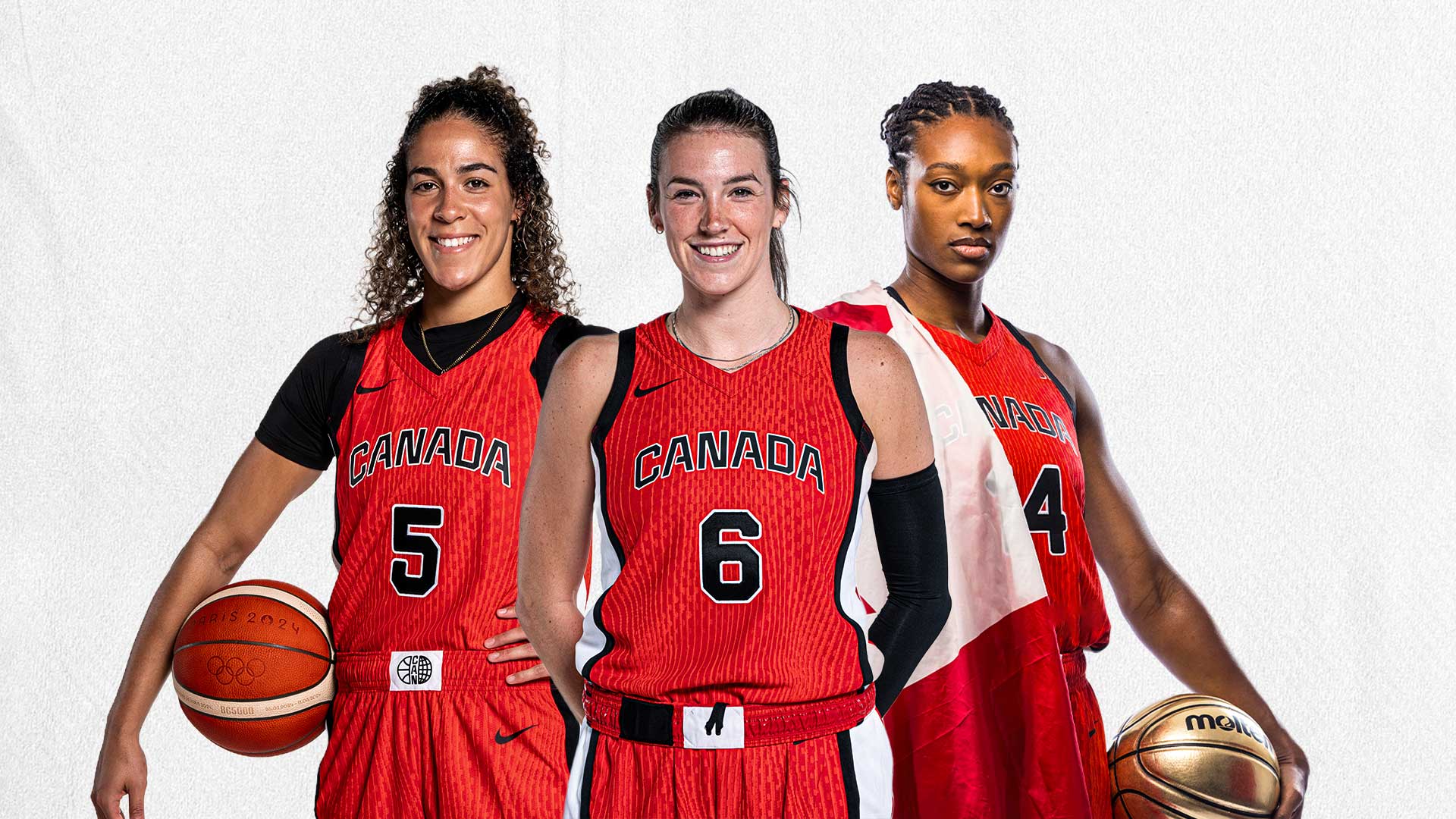
And for the Canadian team
 www.basketball.ca
Roster Announced for FIBA Women’s World Cup 2026 Qualifying Tournament
www.basketball.ca
Last edited:

Aluminny69
Old Timer
- Joined
- Aug 26, 2011
- Messages
- 8,990
- Reaction Score
- 26,396
No true centers on this team? I know Aliyah Boston is injured.
.-.
- Joined
- May 1, 2020
- Messages
- 10,239
- Reaction Score
- 32,909
Love this for the tournament. Give fans the ability to watch these games without having to pay a subscription to access it online. Timing of this tournament is great too with it happening after these conference tournaments.
- Joined
- May 1, 2020
- Messages
- 10,239
- Reaction Score
- 32,909
I've have wondered the same for a while and your post prompted me to research it through Google AI. Here's it's response.I still don’t understand why Puert Rico has a team separate from the U.S. team
"Puerto Rico’s status in international sports is one of those quirks that often confuses people. In the world of high-stakes hoops, Puerto Rico doesn’t just "participate"—they are a legitimate powerhouse with a long-standing independent identity.
The "When": 1957
The Puerto Rican Basketball Federation (FBPUR) officially joined FIBA in 1957.While basketball had been played on the island since the early 1900s (and they actually fielded a team for the Central American and Caribbean Games as early as 1935), 1957 was the year they gained the "keys to the gym" for global FIBA play. They wasted no time making an impact, making their World Championship debut in 1959 and their first Olympic appearance in 1960.
The "Why": Sporting Sovereignty vs. Political Status
The reason Puerto Rico can compete separately from the United States comes down to a concept called sporting sovereignty. Here is the breakdown of why this is allowed:- The "Grandfather" Clause: Before 1996, the International Olympic Committee (IOC) allowed territories and colonies to form their own National Olympic Committees (NOCs) as long as they had "independent" control over their sports. Puerto Rico secured its recognition in 1948.
- The 1996 Rule Change: In 1996, the IOC changed its charter to require that any new members must be independent states recognized by the international community. However, they allowed existing members like Puerto Rico, American Samoa, and Guam to be grandfathered in. If Puerto Rico were to apply for the first time today, they would likely be denied.
- FIBA's Alignment: FIBA generally follows the IOC’s lead. Since Puerto Rico has its own recognized Olympic committee, FIBA recognizes its federation as the sole governing body for the territory.
- National Identity: For many Puerto Ricans, the national team is a significant symbol of cultural identity. Because the island has its own language, culture, and distinct athletic history, the international sporting community treats it as its own "sporting nation," even though the players carry U.S. passports.
Quick Comparison
| Entity | Political Status | Sporting Status |
| Puerto Rico | U.S. Territory | Independent (Grandfathered) |
| Hong Kong | Special Administrative Region (China) | Independent (Grandfathered) |
| Texas | U.S. State | Part of Team USA |
| Scotland | Country within the UK | Independent (FIFA), but part of Team GB (Olympics) |
HuskyNan
You Know Who
- Joined
- Aug 15, 2011
- Messages
- 29,933
- Reaction Score
- 276,531
The ND of FIBA, lol.I've have wondered the same for a while and your post prompted me to research it through Google AI. Here's it's response.
"Puerto Rico’s status in international sports is one of those quirks that often confuses people. In the world of high-stakes hoops, Puerto Rico doesn’t just "participate"—they are a legitimate powerhouse with a long-standing independent identity.
The "When": 1957
The Puerto Rican Basketball Federation (FBPUR) officially joined FIBA in 1957.
While basketball had been played on the island since the early 1900s (and they actually fielded a team for the Central American and Caribbean Games as early as 1935), 1957 was the year they gained the "keys to the gym" for global FIBA play. They wasted no time making an impact, making their World Championship debut in 1959 and their first Olympic appearance in 1960.
The "Why": Sporting Sovereignty vs. Political Status
The reason Puerto Rico can compete separately from the United States comes down to a concept called sporting sovereignty. Here is the breakdown of why this is allowed:
- The "Grandfather" Clause: Before 1996, the International Olympic Committee (IOC) allowed territories and colonies to form their own National Olympic Committees (NOCs) as long as they had "independent" control over their sports. Puerto Rico secured its recognition in 1948.
- The 1996 Rule Change: In 1996, the IOC changed its charter to require that any new members must be independent states recognized by the international community. However, they allowed existing members like Puerto Rico, American Samoa, and Guam to be grandfathered in. If Puerto Rico were to apply for the first time today, they would likely be denied.
- FIBA's Alignment: FIBA generally follows the IOC’s lead. Since Puerto Rico has its own recognized Olympic committee, FIBA recognizes its federation as the sole governing body for the territory.
- National Identity: For many Puerto Ricans, the national team is a significant symbol of cultural identity. Because the island has its own language, culture, and distinct athletic history, the international sporting community treats it as its own "sporting nation," even though the players carry U.S. passports.
Quick Comparison
Entity Political Status Sporting Status Puerto Rico U.S. Territory Independent (Grandfathered) Hong Kong Special Administrative Region (China) Independent (Grandfathered) Texas U.S. State Part of Team USA Scotland Country within the UK Independent (FIFA), but part of Team GB (Olympics)
Thanks for the research

- Joined
- Aug 24, 2011
- Messages
- 26,059
- Reaction Score
- 70,656
I still don’t understand why Puert Rico has a team separate from the U.S. team
In the soccer World Cup, there are separate teams for Scotland, wales, Northern Ireland, British Virgin Islands, U.S. Virgin Islands, French Guiana, American Samoa ….
- Joined
- May 1, 2020
- Messages
- 10,239
- Reaction Score
- 32,909
Never thought of that of comparison. Good one!The ND of FIBA, lol.
Thanks for the research
.-.

- Joined
- Aug 26, 2011
- Messages
- 2,250
- Reaction Score
- 6,562
So the qualifying team is not necessarily the team that will play in the World Cup? Would Stewie, Wilson, Allisha Gray, a healthy Boston, Sabrina perhaps be players on that team? I don't know how it's done.
- Joined
- Apr 25, 2024
- Messages
- 818
- Reaction Score
- 3,495
So the qualifying team is not necessarily the team that will play in the World Cup? Would Stewie, Wilson, Allisha Gray, a healthy Boston, Sabrina perhaps be players on that team? I don't know how it's done.
See Post in thread '2028 Olympic team coach: Sue picks who?'

- Joined
- Sep 22, 2025
- Messages
- 461
- Reaction Score
- 1,778
Anybody remember Butch Lee, Marquette star guard, almost leading PR to an upset of team USA in the Olympics. He was a rock.I've have wondered the same for a while and your post prompted me to research it through Google AI. Here's it's response.
"Puerto Rico’s status in international sports is one of those quirks that often confuses people. In the world of high-stakes hoops, Puerto Rico doesn’t just "participate"—they are a legitimate powerhouse with a long-standing independent identity.
The "When": 1957
The Puerto Rican Basketball Federation (FBPUR) officially joined FIBA in 1957.
While basketball had been played on the island since the early 1900s (and they actually fielded a team for the Central American and Caribbean Games as early as 1935), 1957 was the year they gained the "keys to the gym" for global FIBA play. They wasted no time making an impact, making their World Championship debut in 1959 and their first Olympic appearance in 1960.
The "Why": Sporting Sovereignty vs. Political Status
The reason Puerto Rico can compete separately from the United States comes down to a concept called sporting sovereignty. Here is the breakdown of why this is allowed:
- The "Grandfather" Clause: Before 1996, the International Olympic Committee (IOC) allowed territories and colonies to form their own National Olympic Committees (NOCs) as long as they had "independent" control over their sports. Puerto Rico secured its recognition in 1948.
- The 1996 Rule Change: In 1996, the IOC changed its charter to require that any new members must be independent states recognized by the international community. However, they allowed existing members like Puerto Rico, American Samoa, and Guam to be grandfathered in. If Puerto Rico were to apply for the first time today, they would likely be denied.
- FIBA's Alignment: FIBA generally follows the IOC’s lead. Since Puerto Rico has its own recognized Olympic committee, FIBA recognizes its federation as the sole governing body for the territory.
- National Identity: For many Puerto Ricans, the national team is a significant symbol of cultural identity. Because the island has its own language, culture, and distinct athletic history, the international sporting community treats it as its own "sporting nation," even though the players carry U.S. passports.
Quick Comparison
Entity Political Status Sporting Status Puerto Rico U.S. Territory Independent (Grandfathered) Hong Kong Special Administrative Region (China) Independent (Grandfathered) Texas U.S. State Part of Team USA Scotland Country within the UK Independent (FIFA), but part of Team GB (Olympics)

BannerTown
The artist formerly known as Jonathan14
- Joined
- Feb 12, 2021
- Messages
- 441
- Reaction Score
- 4,164
At the December national team training camp held at Duke, the forwards/centers in attendance were Lauren Betts, Boston, Cam Brink, Dearica Hamby, Kiki Iriafen, Rickea Jackson, Bri Jones, and Angel Reese. (Betts is the only one listed as a "center," Boston as a "forward/center," and the rest as "forward.")No true centers on this team? I know Aliyah Boston is injured.
Boston, Hamby, Iriafen, and Reese all made the roster, while Betts will be otherwise occupied preparing for the NCAA tournament. When Boston went out with an injury, she was replaced by Monique Billings. Interesting that Sue didn't choose to replace her with Jones for her physicality or Brink for her height; perhaps they weren't available. (Sonia Citron was also originally named to the World Cup Qualifying Team, but is unable to play due to injury and was replaced by Rae Burrell.)
.-.
- Joined
- Apr 27, 2022
- Messages
- 450
- Reaction Score
- 2,394
FIBA does not offer qualifying games for the next World Cup on its YouTube channel. However, games played in the European qualifiers should be offered by FIBA. That's what I understand. The press conference for the US game will be available, but you will need to connect (pay) to a network that offers the games. Highlights should be available. On the Canadian side, the Canadian team's games will be available on TSN, which is somewhat the Canadian equivalent of ESPN.

 www.fiba.basketball
USA vs Senegal - Group Phase - FIBA Women's Basketball World Cup 2026 Qualifying Tournament San Juan, Puerto Rico | FIBA Basketball
USA vs Senegal - Browse boxscore, game information & live stats, team rosters, photos and video highlights

- Joined
- Oct 24, 2013
- Messages
- 28
- Reaction Score
- 148
Breanna Stewart:
Interesting insights from Paige.
- Joined
- May 1, 2020
- Messages
- 10,239
- Reaction Score
- 32,909
This made me chuckle as TSN pretty much broadcasts ESPN's morning and afternoon talk shows daily. The word somewhat doesn't seem accurate. 😉FIBA does not offer qualifying games for the next World Cup on its YouTube channel. However, games played in the European qualifiers should be offered by FIBA. That's what I understand. The press conference for the US game will be available, but you will need to connect (pay) to a network that offers the games. Highlights should be available. On the Canadian side, the Canadian team's games will be available on TSN, which is somewhat the Canadian equivalent of ESPN.
USA vs Senegal - Group Phase - FIBA Women's Basketball World Cup 2026 Qualifying Tournament San Juan, Puerto Rico | FIBA Basketball
USA vs Senegal - Browse boxscore, game information & live stats, team rosters, photos and video highlights

- Joined
- Jan 10, 2016
- Messages
- 470
- Reaction Score
- 1,608
Seems like a LOT of games close together. Is this the usual format?
- Joined
- Apr 27, 2022
- Messages
- 450
- Reaction Score
- 2,394
Yes, and it becomes even more demanding in the World Cup. (see attachment)Seems like a LOT of games close together. Is this the usual format?
USA - FIBA Women's Basketball World Cup 2022 | FIBA Basketball Events
USA - All leaders, participating players & roster, game results and stats from FIBA Women's Basketball World Cup 2022

meyers7
You Talkin’ To Me?
- Joined
- Aug 26, 2011
- Messages
- 24,194
- Reaction Score
- 64,473
And just for information (and probably mansplaining and because of who I am), I didn't see it in this thread, the USA has already qualified for the FIBA World Cup. So this is just basically a practice tournament for us.
.-.

- Joined
- Nov 24, 2011
- Messages
- 9,079
- Reaction Score
- 31,932
Pretty much.And just for information (and probably mansplaining and because of who I am), I didn't see it in this thread, the USA has already qualified for the FIBA World Cup. So this is just basically a practice tournament for us.


triaddukefan
Tobacco Road Gastronomer
- Joined
- Aug 26, 2011
- Messages
- 21,360
- Reaction Score
- 68,497
Hopefully with Coach Lawson, the team can score more than 50pts a game.

RockyMTblue2
Don't Look Up!
- Joined
- Aug 26, 2011
- Messages
- 24,006
- Reaction Score
- 109,765
The sports errata addiction makes a showing. Always been too lazy to acquire it. Always impressive.

MilfordHusky
Voice of Reason
- Joined
- Aug 26, 2011
- Messages
- 38,343
- Reaction Score
- 135,157
BTW, Hungary defeated China 77-65 and Dorka led all scorers with 35 points.
Canada lost to Turkey 71-69. Aaliyah scored 10 and Kia 12.
Hungary beat Japan. Was that a career high for Dorka?
MilfordHusky
Voice of Reason
- Joined
- Aug 26, 2011
- Messages
- 38,343
- Reaction Score
- 135,157
Paige had 9/4/3/1 off the bench in 14 minutes. I thought she looked good.
Clark had 17 and 12 dimes, also off the bench. Rhyne Howard was the leading scorer, with 21. Team shot 17-31 from deep. Paige was 1-3; Clark was 4-5.
www.fiba.basketball
Clark had 17 and 12 dimes, also off the bench. Rhyne Howard was the leading scorer, with 21. Team shot 17-31 from deep. Paige was 1-3; Clark was 4-5.
USA vs Senegal - Group Phase - FIBA Women's Basketball World Cup 2026 Qualifying Tournament San Juan, Puerto Rico | FIBA Basketball
USA vs Senegal - Browse boxscore, game information & live stats, team rosters, photos and video highlights
.-.