OT: - Someone explain 5G to me, and why I should/nt be worried. | The Boneyard

OT: Someone explain 5G to me, and why I should/nt be worried.

temery

Administrator
Joined
Aug 14, 2011
Messages
22,399
Reaction Score
65,697
I have no idea what "G" means, but have assumed the more "G" the better. Now I'm seeing the more "G" the more dangerous.

Give me the ELI5 version.

Citrus ... feel free to reply, but this has nothing to do with who was in the grassy knol :)
 
5G uses 24 to 300 GHz (millimeter wavelength), whereas 4G uses 1 to 6 GHz (microwave).

Data transmission rates are proportional to the frequency, so 5G can transmit up to 50 fold more data per second than 4G (assuming the technology is taking full advantage of the higher frequency).

The higher frequency doesn't bend around metal obstacles or penetrate building materials as well so it needs more of a direct line of sight to the transmitting station / cell tower. 5G will experience more drop-offs which the phone vendors are getting around by letting the phones drop back down to 4G. 5G will deliver its greatest upgrade in performance when communicating with 5G-compatible WiFi routers.

Relative health effects of millimeter wave vs microwave exposure are unknown. We are rolling out 5G and will find out the health effects in 30 years. Sort of like rolling out a new coronavirus, only with benefits. The dumb point of view, which I hold to, is that 5G is probably about as risky as 4G, so we might as well take the better bandwidth.
 
Last edited:
It's a communications protocol on specific frequencies. It's the 5th Generation.


Confession: I didn't read all of this, and it may be biased (from a vendor). I have seen that 5G frequencies MAY interfere with weather satellites. Not sure that is accurate either.
 
The biggest change that it offers is its quickness, as opposed to its speed. The response back and forth between devices is quicker, enabling things like self driving cars.
 
.-.
I have no idea what "G" means, but have assumed the more "G" the better. Now I'm seeing the more "G" the more dangerous.

Give me the ELI5 version.

Citrus ... feel free to reply, but this has nothing to do with who was in the grassy knol :)
I have found very little difference in download speed with 5G, but is I go two rooms over from my box I get nothing, so I don't use it. Dangerous I don't think so based on all the animal data I have reviewed.
 
the other really big deal about 5g is that it essentially has zero latency. 3g was massive 100-200ms, so it was very laggy, and couldn't really power "internet of things" IOT or Machine 2 Machine (M2M) applications. 4g was better, in practice 50-100ms. 5g is billed at 5-20ms. I think right now performance is like 30ms but that will come down as the network matures and is deployed more fully, as the deployment of edge servers near the towers will further cut that latency.

The reason latency will be huge is that there is tremendous demand for connected devices, smart cities, etc. All the buzz words that people have been talking about but not really deploying? a huge reason is that latency means its unreliable so the business case right now doesnt' work. Once the latency gets solved, that is all going to explode.
 
.-.
I have found very little difference in download speed with 5G, but is I go two rooms over from my box I get nothing, so I don't use it. Dangerous I don't think so based on all the animal data I have reviewed.

Unless you live in a very small number of cities, and really in the city, you probably don't have "5G" (at least in this context)

Several confusing flavors of this now:
1) "5Ge" from AT&T. This one is 100% snake oil. Yes, it has some more bandwidth, but it's not "5G." They've now "voluntarily" dropped this naming.
2) 5G that isn't ultra-wideband - TMobile is best example. Faster, better, but not the one people are freaking out about.
3) Ultra-wideband 5G. This is the one in cities, with low latency and massive speed gains. It's only in cities because the signal won't go as far. This is the one that is concerning to the tin-foil hat crowd, as the "waves haven't been tested, man." There *is* potentially impact to weather forecasting due to interference, but the FCC didn't care (because the chair is a shill to telecoms, but i digress).
 
.-.
healthwise, it depends on your comfort level with 'ionizing radiation' and if you feel that 5g can be ionizing radiation, or if it is 'non-ionizing radiation.' the balance of argument thus far, especially from vested interests, is that 5g is 'non-ionizing' radiation. the simplest illustration for the power of human manipulated radiation is hiroshima as another example, Connecticut draws about 5500 mw of electricity per day, with about 2200 mw a day coming from just a few acres of development over in Waterford. that's a whole lot of power being generated from radiation in a small space. our new aircraft carriers carry around 500 mw of radiation generated power.
'The global average exposure of humans to ionizing radiation is about 3 mSv (0.3 rem) per year, 80% of which comes from nature. The remaining 20% results from exposure to man-made radiation sources, primarily from medical imaging. Average man-made exposure is much higher in developed countries, mostly due to CT scans and nuclear medicine.'
mebbe some old timers here remember this one:
'For example, at one time, assistants in shoe shops used X-rays to check a child's shoe size, but this practice was halted when the risks of ionizing radiation were better understood.'
sometimes, our ability runs far ahead of our understanding. science illiteracy? get back to me when many 'scientists' today are even remotely close to ol nikki tesla and his holistic understanding for the electromagnetic spectrum. and why has male fertility potential been halved in the past 50 years? are we frying our junk? idk.
securitywise, 5g is a pandora's box of potential abuse.

 
Last edited:
1593697185919.png
 

Attachments

  • 1593696971663.png
    1593696971663.png
    66.4 KB · Views: 170
healthwise, it depends on your comfort level with 'ionizing radiation' and if you feel that 5g can be ionizing radiation, or if it is 'non-ionizing radiation.' the balance of argument thus far, especially from vested interests, is that 5g is 'non-ionizing' radiation. the simplest illustration for the power of human manipulated radiation is hiroshima as another example, Connecticut draws about 5500 mw of electricity per day, with about 2200 mw a day coming from just a few acres of development over in Waterford. that's a whole lot of power being generated from radiation in a small space. our new aircraft carriers carry around 500 mw of radiation generated power.
'The global average exposure of humans to ionizing radiation is about 3 mSv (0.3 rem) per year, 80% of which comes from nature. The remaining 20% results from exposure to man-made radiation sources, primarily from medical imaging. Average man-made exposure is much higher in developed countries, mostly due to CT scans and nuclear medicine.'
mebbe some old timers here remember this one:
'For example, at one time, assistants in shoe shops used X-rays to check a child's shoe size, but this practice was halted when the risks of ionizing radiation were better understood.'
sometimes, our ability runs far ahead of our understanding. science illiteracy? get back to me when many 'scientists' today are even remotely close to ol nikki tesla and his holistic understanding for the electromagnetic spectrum. and why has male fertility potential been halved in the past 50 years? are we frying our junk? idk.
securitywise, 5g is a pandora's box of potential abuse.
This is scientific illiteracy. Thanks for the convenient example.
 
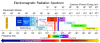
This chart shows where 5G sits on the electromagnetic spectrum a bit more clearly. Well outside the radioactive frequencies but it does blend in to microwave wavelengths.


1593697702751.png
 
.-.
To put this in even better perspective, you are orders of magnitude more likely to suffer deleterious effects from a walk on a sunny day than 5g exposure.

The intensity of the 5g radiation is not nearly strong enough to overcome its long wavelength.

The fears are unfounded.
 
the other really big deal about 5g is that it essentially has zero latency. 3g was massive 100-200ms, so it was very laggy, and couldn't really power "internet of things" IOT or Machine 2 Machine (M2M) applications. 4g was better, in practice 50-100ms. 5g is billed at 5-20ms. I think right now performance is like 30ms but that will come down as the network matures and is deployed more fully, as the deployment of edge servers near the towers will further cut that latency.

The reason latency will be huge is that there is tremendous demand for connected devices, smart cities, etc. All the buzz words that people have been talking about but not really deploying? a huge reason is that latency means its unreliable so the business case right now doesnt' work. Once the latency gets solved, that is all going to explode.
can you describe an IOT use case that is not feasible with 100ms (4g) latency, that will be enabled with 20ms (5g) latency?
 
This chart shows where 5G sits on the electromagnetic spectrum a bit more clearly. Well outside the radioactive frequencies but it does blend in to microwave wavelengths.


View attachment 56063
I want that old VHF tv space or at least a bit of it. Apparently that portion of the spectrum is useful in mind control. (Good for distance and coverage too)
 
can you describe an IOT use case that is not feasible with 100ms (4g) latency, that will be enabled with 20ms (5g) latency?

IoT can't go from niche "oh nice connected dishwasher" to infrastructure "oh my car drives itself now" or really anything related to healthcare needs until latency gets much much closer to zero.

100ms is a lifetime for critical infrastructure related connex. 20? now we're talking.

here's a quick article on it.

 
.-.

Forum statistics

Threads
168,547
Messages
4,581,745
Members
10,491
Latest member
7774Forever


Top Bottom