
You are using an out of date browser. It may not display this or other websites correctly.
You should upgrade or use an alternative browser.
You should upgrade or use an alternative browser.
Key tweets, and it's all gone to Hell.
- Thread starter ZooCougar
- Start date

Waquoit
Mr. Positive
- Joined
- Aug 24, 2011
- Messages
- 36,487
- Reaction Score
- 102,094
That these "rules" have anything to do with college football is ridiculous.I mean that's between UConn and the AAU, ain't my rules

- Joined
- Sep 21, 2011
- Messages
- 5,989
- Reaction Score
- 15,094
Arizona is forced into densityConnecticut is about twice as densely populated as Florida, so if you're unhappy with how busy and overcrowded Florida has become, you're really gonna dislike pretty much anywhere the Bos-Wash corridor. At least in Florida you can go sit on one of the nicest beaches in the country to be unhappy about all the people.
Although it’s top ten in areas
between public lands and native
Reservations 500,,000 sq miles of them
populated by 300k from 20 different nations .
only 18% of the land is available for private use.
The US government owns a large % of the land in Western Stares except Texas .
One thing the Cowboys and Indians have in common is distrust of the Federal government . One the BOIA the other BOLM , both departments of the interior .

- Joined
- Aug 13, 2013
- Messages
- 9,079
- Reaction Score
- 8,792
Thus the density ratings...120,000 in basically a compact urban area...Hartford (18 sq. miles) is also less than half the size of Disney World (40 sq. miles), Tallahassee (95 sq. miles) is more than 5x bigger by land area
Heck, FSU covers 487 acres...44,600 students. FAMU has about 10,000...both in city limits just blocks from downtown...
I made an error...Census lists Tallahassee at population of 201,731
- Joined
- Aug 13, 2013
- Messages
- 9,079
- Reaction Score
- 8,792
Western North Carolina is very different from both Hartford and Tallahassee....Both Tallahassee and Hartford have 30 something percent of their population identifying as "black"...
This county in the mountains has less than 2%...as do surrounding counties...it took a while to get used to the non diverse population characteristics.
This county in the mountains has less than 2%...as do surrounding counties...it took a while to get used to the non diverse population characteristics.

- Joined
- Aug 24, 2011
- Messages
- 26,059
- Reaction Score
- 70,658
Thus the density ratings...120,000 in basically a compact urban area...
Heck, FSU covers 487 acres...44,600 students. FAMU has about 10,000...both in city limits just blocks from downtown...
I made an error...Census lists Tallahassee at population of 201,731
This is why city comparisons are silly. The economic unit is the metro area.
Among the nearly 400 metro areas, Hartford metro area's density is in the top 30. (Hartford+Middlesex+Tolland counties)
Hartford = 800 people/sq mi
Tallahassee = 170
Jax, FL = 530
Only metros in the south in the top 30 = Dallas, Houston, Miami, Tampa, and Cape Coral-Ft Myers.
(Well, technically, Baltimore & DC are south too, though no one would say they are.)
.-.

CL82
James Breeding sucks
- Joined
- Aug 24, 2011
- Messages
- 64,033
- Reaction Score
- 251,885
Actually, "metro area" is a misleading term because the size widely varies from city to city. The better comparison is taking a consistent distances for every city so that you you are comparing apples to apples regardless of whether an area choose to roll all the surrounding communities into the city or whether, as in the case of Hartford, West Hartford etc. they chose to maintain separate municipalities.This is why city comparisons are silly. The economic unit is the metro area.
Among the nearly 400 metro areas, Hartford metro area's density is in the top 30. (Hartford+Middlesex+Tolland counties)
Hartford = 800 people/sq mi
Tallahassee = 170
Jax, FL = 530
Only metros in the south in the top 30 = Dallas, Houston, Miami, Tampa, and Cape Coral-Ft Myers.
(Well, technically, Baltimore & DC are south too, though no one would say they are.)
Actually, "metro area" is a misleading term because the size widely varies from city to city. The better comparison is taking a consistent distances for every city so that you you are comparing apples to apples regardless of whether an area choose to roll all the surrounding communities into the city or whether, as in the case of Hartford, West Hartford etc. they chose to maintain separate municipalities.
Distances are different though depending on where you are in the country. There’s more land in the Midwest than the Norheast, ergo cities are built differently.
As opposed to Willimantic, So Windham, North Windham and Windham Center, all under Windham, part of the Greater Willimantic Metropolitan regionActually, "metro area" is a misleading term because the size widely varies from city to city. The better comparison is taking a consistent distances for every city so that you you are comparing apples to apples regardless of whether an area choose to roll all the surrounding communities into the city or whether, as in the case of Hartford, West Hartford etc. they chose to maintain separate municipalities.
CL82
James Breeding sucks
- Joined
- Aug 24, 2011
- Messages
- 64,033
- Reaction Score
- 251,885
No, development may be different, but distances are always the same since they are all defined terms. That's why it makes sense to use defined distances as a standard. That allows you to make apples to apples comparisons.Distances are different though depending on where you are in the country. There’s more land in the Midwest than the Norheast, ergo cities are built differently.
Different areas utilize distances in different ways for a variety of reasons. Metro areas are limiting and distortable, but so are straight up drawing circles around cities.No, development may be different, but distances are always the same since they are all defined terms. That's why it makes sense to use defined distances as a standard. That allows you to make apples to apples comparisons.
CL82
James Breeding sucks
- Joined
- Aug 24, 2011
- Messages
- 64,033
- Reaction Score
- 251,885
How is a set distance "distortable"? It is exactly the opposite. It is a constant. When you were doing a comparison you want to limit variables so that you can measure change in the specific variable your testing. In this case that variable would be location.Different areas utilize distances in different ways for a variety of reasons. Metro areas are limiting and distortable, but so are straight up drawing circles around cities.
.-.
Because not all places are built the same. A 30-mile circle around Hartford would get into Springfield and the outskirts of the NYC and Boston CSAs. The same circle around Raleigh wouldn't get you to Hillsborough, Sanford, or Dunn (all which send a steady amount of commuters to Raleigh). Circles tells you how many live within an arbitrary distance from a center point, but not really touching how those people interact with the center point. MSAs have their own issues (see Raleigh being split from Durham). Both are flawed.How is a set distance "distortable"? It is exactly the opposite. It is a constant. When you were doing a comparison you want to limit variables so that you can measure change in the specific variable your testing. In this case that variable would be location.
CL82
James Breeding sucks
- Joined
- Aug 24, 2011
- Messages
- 64,033
- Reaction Score
- 251,885
I have no doubt that both are imperfect measurements, but the question is which is "less than perfect." It really depends on what you're measuring, right? If you were looking at, say potential resident tax ramifications, then, yes, you would absolutely look at municipal boundaries . But generally the most telling approximation is the number of people within a certain distance to the municipality. That is particularly applicable to athletic teams since the question really is how many people can reasonably attend the game or are likely to support a team.Because not all places are built the same. A 30-mile circle around Hartford would get into Springfield and the outskirts of the NYC and Boston CSAs. The same circle around Raleigh wouldn't get you to Hillsborough, Sanford, or Dunn (all which send a steady amount of commuters to Raleigh). Circles tells you how many live within an arbitrary distance from a center point, but not really touching how those people interact with the center point. MSAs have their own issues (see Raleigh being split from Durham). Both are flawed.
It gets even more complicated when you start discussing sports teams. The Whalers moved in part because of they were losing the turf war in a crowded marketplace, regardless of the number of people inside their circle. Have to look at a whole host of data and then figure out how best to interpret it.I have no doubt that both are imperfect measurements, but the question is which is "less than perfect." It really depends on what you're measuring, right? If you were looking at, say potential resident tax ramifications, then, yes, you would absolutely look at municipal boundaries . But generally the most telling approximation is the number of people within a certain distance to the municipality. That is particularly applicable to athletic teams since the question really is how many people can reasonably attend the game or are likely to support a team.
CL82
James Breeding sucks
- Joined
- Aug 24, 2011
- Messages
- 64,033
- Reaction Score
- 251,885
Agree. You absolutely have to understand the competitions for viewers/fans within a given marketplace. But first, you have to define what that given marketplace is. That is another very distinct advantage UConn has since, for all practical purposes it really doesn't compete with other college teams for fans.It gets even more complicated when you start discussing sports teams. The Whalers moved in part because of they were losing the turf war in a crowded marketplace, regardless of the number of people inside their circle. Have to look at a whole host of data and then figure out how best to interpret it.
I feel like we are drifting a little bit though.

- Joined
- Aug 13, 2013
- Messages
- 9,079
- Reaction Score
- 8,792
Court rules athletes can transfer twice and play....

 apnews.com
College athletes who transfer twice can play, for now, after a judge sets aside NCAA transfer rule
College athletes who were denied the chance to play immediately after transferring a second time can return to competition, for now.
apnews.com
.-.
- Joined
- Aug 13, 2013
- Messages
- 9,079
- Reaction Score
- 8,792
This is a preliminary ruling, but the standard for this injunction is that the court believes the plaintiffs (players) have a "likely chance" of winning. Not just some chance. The court has to pre-determine the issue a bit to issue this. It's a big deal.
Full free agency has arrived.
Full free agency has arrived.

- Joined
- May 27, 2014
- Messages
- 4,817
- Reaction Score
- 28,453
About to see 4 school-4 year players…great. /sThis is a preliminary ruling, but the standard for this injunction is that the court believes the plaintiffs (players) have a "likely chance" of winning. Not just some chance. The court has to pre-determine the issue a bit to issue this. It's a big deal.
Full free agency has arrived.
- Joined
- Sep 21, 2011
- Messages
- 5,989
- Reaction Score
- 15,094
Ten largest cities in area on the USHartford (18 sq. miles) is also less than half the size of Disney World (40 sq. miles), Tallahassee (95 sq. miles) is more than 5x bigger by land area
- Sitka, AK (2,870.3 mi2)
- Juneau, AK (2,701.9 mi2)
- Wrangell, AK (2,542.5 mi2)
- Anchorage, AK (1,704.7 mi2)
- Jacksonville, FL (747 mi2)
- Anaconda, MT (735.6 mi2)
- Butte, MT (716.2 mi2)
- Oklahoma City, OK (607 mi2)
- Houston, TX (599.6 mi2)
- Phoenix, AZ (516.7 mi2

Dream Jobbed 2.0
“Most definitely”
- Joined
- May 3, 2016
- Messages
- 15,125
- Reaction Score
- 57,299
Could you imagine if Hartford stretched from Farmington to Manchester?

- Joined
- Aug 2, 2016
- Messages
- 4,878
- Reaction Score
- 61,170
Says OSU and WSU want to rebuild the PAC12

- Joined
- Jul 1, 2016
- Messages
- 4,579
- Reaction Score
- 24,817
Says OSU and WSU want to rebuild the PAC12
Always figured the PAC moniker would stick around with OSU and WSU. I'm assuming the only question is will it be a full merger with the MWC or will they pick and choose the top pieces from the MWC, WCC, AAC, others?
There's a chance to trim some fat off the bottom of the MWC if they care to. A new PAC that leaves out Air Force would make the American an even more realistic and enjoyable destination for UConn football
.-.
- Joined
- Jan 13, 2016
- Messages
- 120
- Reaction Score
- 422
Isn't there a $16.5 exit fee in the MW? Not sure multiple schools are paying that exit fee just to trim the fat and play with OSU/WSU.

shizzle787
King Shizzle DCCLXXXVII of the Cesspool
- Joined
- Oct 19, 2015
- Messages
- 12,918
- Reaction Score
- 22,704
It could be 34 million depending on when they leave. At the end of the day, the Pac-2 and MW will likely merge under the Pac-12 banner.Isn't there a $16.5 exit fee in the MW? Not sure multiple schools are paying that exit fee just to trim the fat and play with OSU/WSU.
- Joined
- Dec 20, 2013
- Messages
- 1,979
- Reaction Score
- 4,307
Maybe they can get apple or Amazon to give them money
CL82
James Breeding sucks
- Joined
- Aug 24, 2011
- Messages
- 64,033
- Reaction Score
- 251,885
It will be interesting to see if that happens. If I'm the mountain west, I am looking to get a piece of the exit feed treasure chest that WSU and OSU are sitting on. I don't see that they have many other choices.It could be 34 million depending on when they leave. At the end of the day, the Pac-2 and MW will likely merge under the Pac-12 banner.
WSU and OSU have to think about whether that merger is more valuable to them than keeping the exit fees, which are considerable.
- Joined
- Jan 21, 2016
- Messages
- 2,349
- Reaction Score
- 5,710
No mention of realignment in UConn's 10-year strategic plan, or even winning football teams
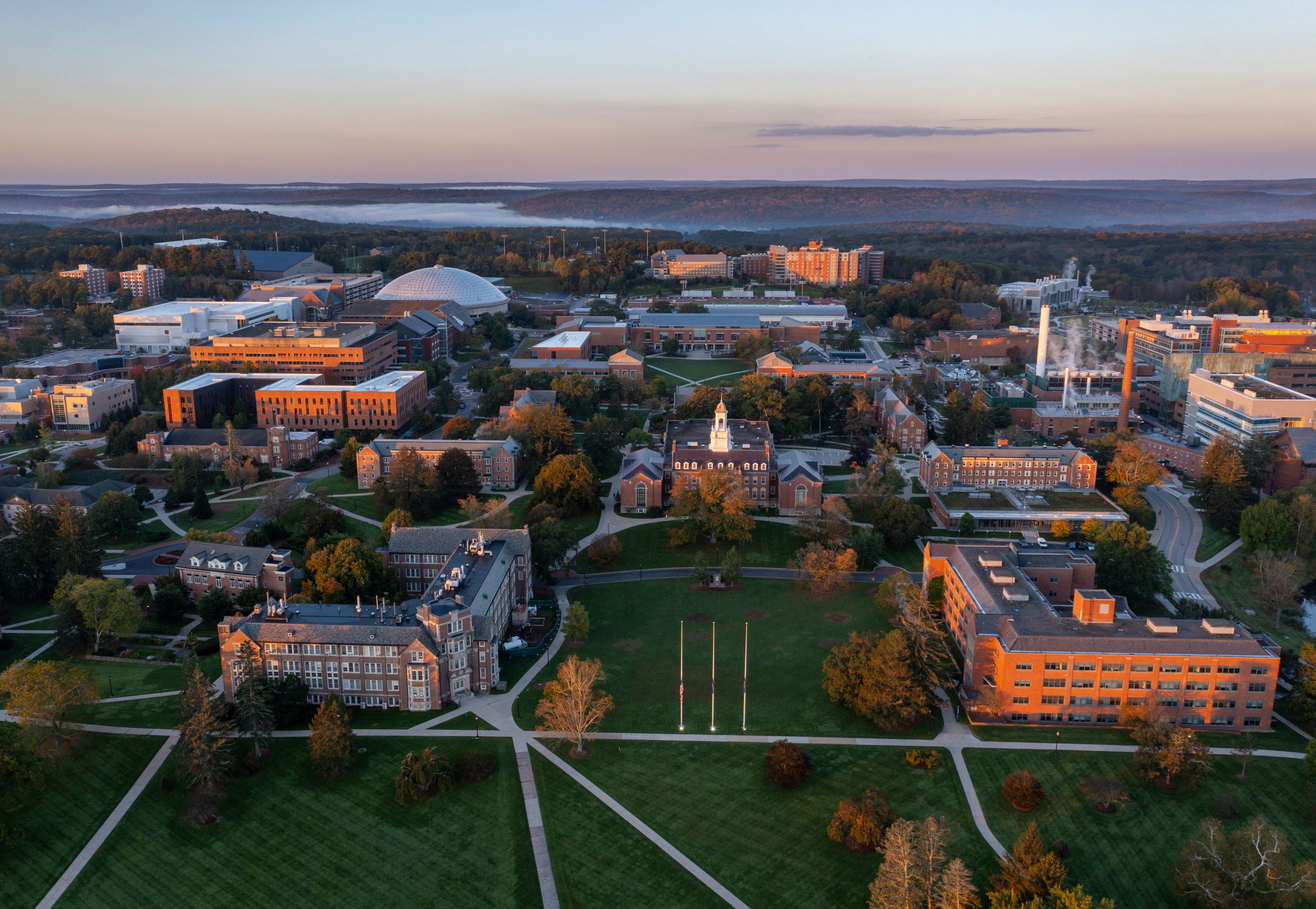
 today.uconn.edu
UConn Adopts Ambitious 10-Year Strategic Plan - UConn Today
Building on the pillars of promoting holistic student success, expanding the University’s research impact, and helping Connecticut thrive
today.uconn.edu

- Joined
- Feb 24, 2019
- Messages
- 1,479
- Reaction Score
- 8,259
All due respect loyal, when you're trying to achieve a billion dollar endowment and $500 million on yearly research money, winning football games and realignment do not even register as a priority.No mention of realignment in UConn's 10-year strategic plan, or even winning football teams
UConn Adopts Ambitious 10-Year Strategic Plan - UConn Today
Building on the pillars of promoting holistic student success, expanding the University’s research impact, and helping Connecticut thrive
.-.