
- Joined
- Apr 6, 2014
- Messages
- 220
- Reaction Score
- 703
Oh, this is going to be fun.


Oh, this is going to be fun.
I don't understand how you can make that assertion. Though its research activity is about the same as UConn's, its USN&WR ranking is about 100 points lower. It's clearly an outlier among the AAU schools, with only a marginally better Missouri in about the same leaky boat. Note that Iowa State, though recently defrocked (probably because it doesn't have a med school), still has better AAU metrics than Kansas -- at least according to this chart.Kansas is fine, their profile is as good as UConn's and they have history on their side.
The ones that look weak by this metric are Brandeis, UC Riverside, UC Santa Barbara, and Oregon. But Brandeis was only recently added. So looks like the AAU is using other metrics.

How would a true imbecile know that he is one?Yes, because football is a notable warm weather sport.
Tell me - are you an imbecile?

I don't understand how you can make that assertion. Though its research activity is about the same as UConn's, its USN&WR ranking is about 100 points lower. It's clearly an outlier among the AAU schools, with only a marginally better Missouri in about the same leaky boat. Note that Iowa State, though recently defrocked (probably because it doesn't have a med school), still has better AAU metrics than Kansas -- at least according to this chart.
It would be interesting to know what other metrics AAU considers. Undergrad education at recently added Notre Dame, for example, has an enviable reputation, but it has a puny research portfolio.
Kansas is often mentioned as a possible candidate for a B1G invitation, but I can't imagine that the B1G would opt for another school with questionable academics and relatively low research activity from a sparsely populated prairie state.

AAU cares about competitive grants. The amount of grant money that apply for and are granted determines your ranking. It’s not just the amount of grant money, but how it’s awarded. At least that’s how it was explained to me. There are other factors, but, like you, I doubt that USN&WR is one of them.I don't think the AAU cares about USN&WR ranking, especially for state universities. Kansas is a fine university that is mandated by its state to do admissions in a way that isn't favorable for USN&WR ranking. It is very comparable to UConn on nearly every other metric.
Notre Dame per the chart has research dollars 70% of UConn and superior to Rice, Tulane, and Tufts (which has a medical school). That surprised me but if the chart is accurate, then they are doing very well for research on a per-faculty member basis, which is the reason Brandeis got in.

How would a true imbecile know that he is one?

Yes, I don’t believe the USNWR is factored. It’s based on competive grants in proportion to the number of faculty. That is why a school like Brandeis is AAU even though the amount of their research money appears to be low.AAU cares about competitive grants. The amount of grant money that apply for and are granted determines your ranking. It’s not just the amount of grant money, but how it’s awarded. At least that’s how it was explained to me. There are other factors, but, like you, I doubt that USN&WR is one of them.

AAU is based on MEDICAL research dollars. Syracuse (a Tier 1 research university) was AAU but left when the rules changed. SU's research is not medical-centric.AAU is based on research dollars. The next AAU member will come from a Tier 1 research university.

It's all lip service. Interesting though how all of a sudden Notre Dame and Miami both joined the AAU in 2023. I always figured if the Big 10 wanted someone, AAU membership would appear straight away. Notre Dame's research seems to be far below the AAU average.I always laugh when people say aau is a requirement for anything. That is just lip service. Whatever happened to the contiguous rule for big 10?
AAU may not have been a technical requirement, but it was a de facto criteria because of academics and research. It seems the Big 10 only invited AAU members because they fit the CIC mold.AAU was never a requirement. I have no idea where that even originated from. Michigan State did not join the AAU until 8 years after it joined the B1G.

Does someone else want to say it or should I?I can see you’re real smart with your goofy shark icon “Fishy”. I imagine you typing out your witty comebacks while sitting in your parent’s basement.

Nah. Just let it play out.Does someone else want to say it or should I?

B1G teams released their volleyball schedules. Once again, travel is well thought out and minimizing the negative effects on student athletes.
As in other non-football schedules announced so far with 20 conference games, the former PAC schools will play home and home against each other and then either home or away against the 14 other B1G schools.
Here are Washington's 10 away games.......
@ USC (Sunday)
@ UCLA (Wednesday)
@ Oregon (Sunday)
Those are three trips they have always made for conference games.
And the 7 games in the Eastern and Central Time Zones are a total of 4 trips, 3 of the 7 games are played on a Sunday, so they will not miss class for those 3 games and will be back on campus on Sunday evenings. Those 3 games follow Friday games. While times have not been released, I'm assuming the Friday games are at night, where the west coast teams can fly out first thing Friday morning on a charter flight and then get to their destination with plenty of time for warmups and what not, so students only miss 1 day of class (Friday) for those double play weekend games.
@ Iowa (Friday) and @ Wisconsin (Sunday)
@ Michigan (Friday) and @ Michigan State (Sunday)
@ Ohio State (Friday) and @ Penn State (Sunday)
And then since there are an odd number of away games with the 7/7 split, one trip by itself......
@ Minnesota (Thursday)
So if you add that all up, 5 of the 10 away games are on a Sunday and will result in no missed class time. The other 5 games result in missing class 1 day each, for a total of 5 missed class days. You could even be generous here and say they fly out the day before the games to be well rested and that is still only 10 missed class days, including the Wednesday game @ UCLA.
4 trips to the Eastern/Central Time Zone. And remember, in the past, they would have made AT LEAST 1 such trip in the nonconference portion of the schedule every year, whereas now those nonconference games are going to be more regionally scheduled.
Big Ten Volleyball Schedule Unveiled - University of Washington Athletics
Washington's map through its first fall in the Big Ten was handed over today as the Huskies will establish many new conference rivalries, while building on s...gohuskies.com

When going through many candidates who are pretty equal a honorific like AAU membership could get you to the next level regardless of it being an actual requirement., Unless you‘ gone through 200 resumes your probably not aware that details like professional certifications and honors . although not required could get you an interview.AAU is based on MEDICAL research dollars. Syracuse (a Tier 1 research university) was AAU but left when the rules changed. SU's research is not medical-centric.

Flush out your headgear, new guy.I can see you’re real smart with your goofy shark icon “Fishy”. I imagine you typing out your witty comebacks while sitting in your parent’s basement.
I don’t believe that is the case. While medical research helps a lot with the AAU metrics, it is generally about receiving competitive grants. The university of Maryland College Park does not have or count a medical school as part of its university, but is AAU, and in no danger of losing its status. Rutgers was admitted to the AAU well before they acquired two medical schools, and was not in danger of losing AAU status before they acquired them.AAU is based on MEDICAL research dollars. Syracuse (a Tier 1 research university) was AAU but left when the rules changed. SU's research is not medical-centric.

 www.insidenu.com

What jasmer doesn't know is that Fishy has a dozen kids tied up in his basement doing his typing for him while he walks the dog for mojo.Does someone else want to say it or should I?

We need to build an on-campus baseball stadium! That will solve the attendance issue. Oh, wait, we did!Look through the attendance rankings, see where the warm weather is and then note the correlation between nice weather and baseball attendance.
You have my permission to sit outside during a New England spring until the lightbulb goes off.
 www.spokesman.com

We need to build an on-campus baseball stadium! That will solve the attendance issue. Oh, wait, we did!
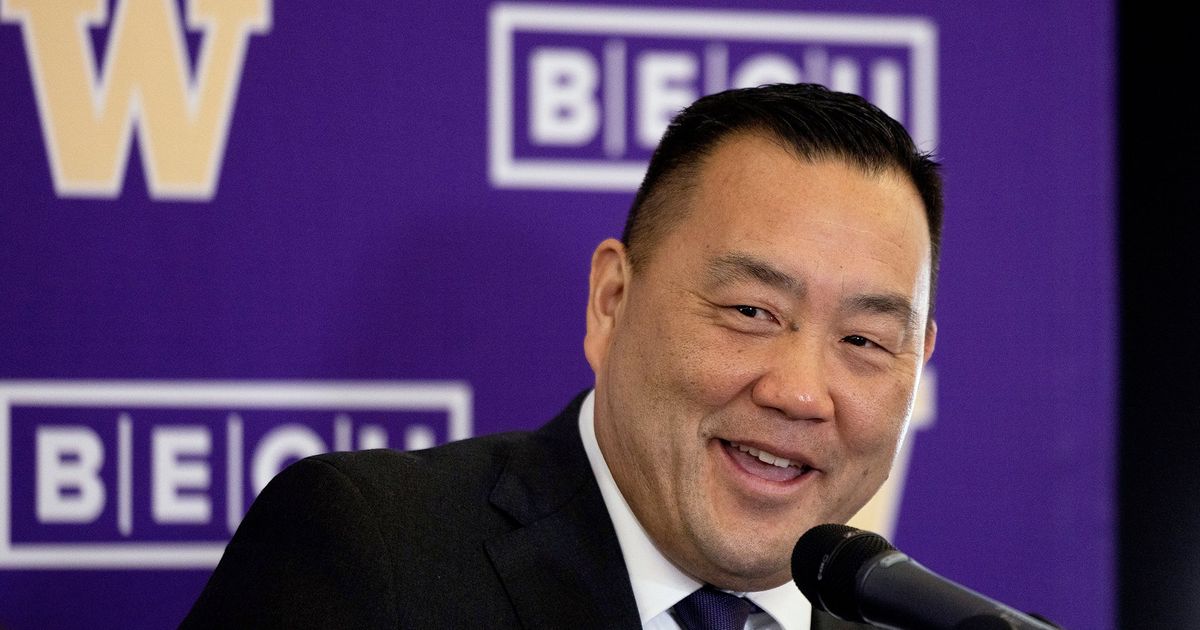
“Every school has their challenges going forward,” Chun said. “And we appreciate the board’s willingness to work with us as we work through these challenges.”An inside look at Washington athletics finances.........
Surprisingly (to me anyways), Washington has to spend $30 million to build an on-campus Big Ten Network studio and make other upgrades for its athletic facilities to be Big Ten Network compatible. I'm assuming Washington had a PAC-12 Network and the capability for that network to film all Olympic sports. That's why I'm surprised they needed to make $30 million in upgrades.
Also, this is the first time I have read anything about Washington taking out loans against future Big Ten earnings. Washington was awarded two $10-million loans from the Big Ten and Fox Sports respectively to be paid back interest-free after the Huskies receive a full-share of B1G revenues in 2030. It will be interesting to see if they have to take out additional loans prior to 2030. I'm not sure if Oregon needed loans or not. USC and UCLA are already receiving full-share payouts, so they should not need loans.
UW athletics projects $30 million in one-time expenses before Big Ten move
SEATTLE – Washington athletic director Pat Chun and longtime deputy athletic director Erin O’Connell, who also serves as chief operating officer, addressed the Washington Board of Regents Thursday, seeking approval for their 2025 athletics budget.
Nebraska fans turn out for everything.Nebraska has high baseball attendance....Lincoln isn't known for toasty springs....
This AAU/Big Ten things is dumb. It doesn't matter. There was a thing, once, that said BIG Ten must be contiguous states. Then, it didn't matter when money invovled.I don’t believe that is the case. While medical research helps a lot with the AAU metrics, it is generally about receiving competitive grants. The university of Maryland College Park does not have or count a medical school as part of its university, but is AAU, and in no danger of losing its status. Rutgers was admitted to the AAU well before they acquired two medical schools, and was not in danger of losing AAU status before they acquired them.
A big rule change was when the AAU de-emphasized agricultural related grants, which are non-competitive. That is what hurt Nebraska. They could have elected to acquire the NU med school, which probably would have kept them in, but they chose not to. In this case, it was not so much that it was a med school, but they did receive grants that were competitive.
I agree somewhat with your points. Yes, the AAU is not a requirement for the Big Ten. They invited Michigan State before they were in the AAU. The Big Ten coveted Notre Dame since the 1990s in a manner akin to a preteen crush. And they invited Nebraska knowing they were likely going to be voted out of the AAU, with two of the Big Ten schools voting to oust them.This AAU/Big Ten things is dumb. It doesn't matter. There was a thing, once, that said BIG Ten must be contiguous states. Then, it didn't matter when money invovled.
If there is a non AAU school that the Big 10 wants, academic status is not a barrier.