The Private Equity College Sports Hellscape Thread | Page 3 | The Boneyard

The Private Equity College Sports Hellscape Thread

I know the PE industry pretty well. I have personally never seen a deal that was contingent on a government entity (like a school) providing a revenue stream (such as student fees) that the government entity was not legally obligated to provide for some service it needed. PE firms invest in revenues and cash flow, not typically a stream of subsidies. The closest I have ever seen to something like this is investing in a business that is dependent on tax subsidies or some other kind of regulatory arbitrage, but even that is a much firmer investment strategy than being dependent on an athletic department's student fee stream.
Yeah, and that probably means this whole thing is a pipe dream.

Like you, I don't see anyone looking to make an investment in an athletic department's media rights. Too much uncertainty in a changing media landscape.

If you are correct that the big revenue streams are off limits for outside investors, then this discussion is all just noise and there is never going to be a deal.

But here:
I have personally never seen a deal that was contingent on a government entity (like a school) providing a revenue stream (such as student fees) that the government entity was not legally obligated to provide for some service it needed.

I don't think this is necessarily going to stop an aggressive PE investor. Just because you have not seen it, doesn't mean someone is not going to try it. They may not succeed, but if they ever do I hope it's at FSU.

:)
 
I know the PE industry pretty well. I have personally never seen a deal that was contingent on a government entity (like a school) providing a revenue stream (such as student fees) that the government entity was not legally obligated to provide for some service it needed. PE firms invest in revenues and cash flow, not typically a stream of subsidies. The closest I have ever seen to something like this is investing in a business that is dependent on tax subsidies or some other kind of regulatory arbitrage, but even that is a much firmer investment strategy than being dependent on an athletic department's student fee stream.
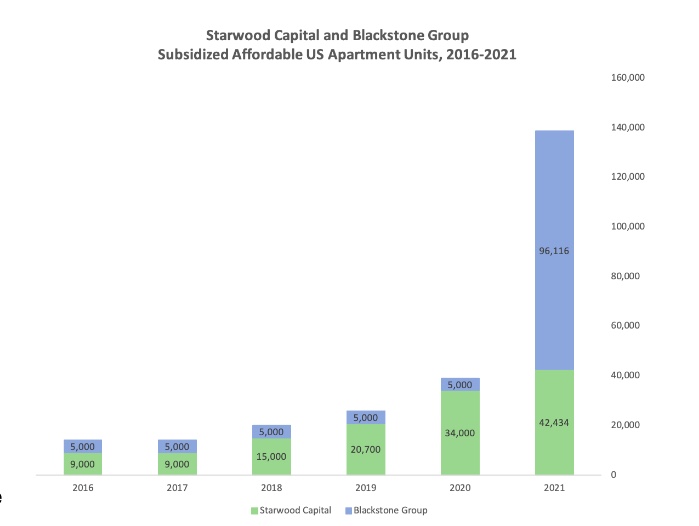
I was curious so a quick google search regarding affordable housing which is heavily subsidized by the government. I was surprised. This is not the same thing and I may not understand your statement entirely. The way I see at least the large public universities like UConn, they can find the money if necessary.

 
Jon Wilner discusses the enrollment cliff and how universities need to find a way to attract students. I'm not arguing for or against the idea of PE, just why it might make sense.

"The infusion of cash from private equity would offer a chance to remain competitive on the field and, as a result, in the admissions game."

"Every metric used in the admissions game will become more important: Membership in the Association of American Universities, placement in the U.S. News and World Report rankings and, of course, the acceptance rates that drive reputation and prestige."

"Should the presidents sell a stake in the conference?
That probably depends on the terms.
Should they give the matter serious consideration?
Because of a daunting macro environment two decades in the making, they don’t have a choice."


This makes no sense. Effectively, you're arguing that the universities should borrow from the future in order to bribe students to attend now so that they don't have to downsize now, when the demographic changes are permanent and they would only be delaying downsizing to a future when they would have less revenue, more debt, and less control because of constraints given to the PE investors.

It is mortgaging the future to avoid being rational in the present.
 
This makes no sense. Effectively, you're arguing that the universities should borrow from the future in order to bribe students to attend now so that they don't have to downsize now, when the demographic changes are permanent and they would only be delaying downsizing to a future when they would have less revenue, more debt, and less control because of constraints given to the PE investors.

It is mortgaging the future to avoid being rational in the present.
Jon Wilner wrote the article, not me.

What do you mean, it makes no sense? That is the American way. Borrow now and repay it later. Every single one of us has debt. And to clarify, they would not be borrowing. They would be selling equity shares. There is a big difference.

No one says the demographic changes are permanent. They could swing the other way 10 years from now. If the drop off in enrollments are long term, which they most likely are not, these particular universities who take action now may survive the cut while others may not. It makes perfect sense from that standpoint.
 
I was curious so a quick google search regarding affordable housing which is heavily subsidized by the government. I was surprised. This is not the same thing and I may not understand your statement entirely. The way I see at least the large public universities like UConn, they can find the money if necessary.


That is completely different. The U.S. government has programs to help people pay rent and have housing. If the government does not do that, some people will not have housing. Someone has to own those housing units, so PE firms stepped up because they knew there was demand for the rental properties. It is actually in the government's interest for investment capital to come into affordable housing, so the relationship makes sense.

Student fees do not have to be paid to athletics at all. The schools choose to do it because it helps with marketing and alumni and students like it. Why would the school, instead of paying money into its football team, pay student fees to a private equity firm? Why would the school do that? The transaction you are proposing the PE firms do is pay the schools for a piece of their athletic department, then have the schools pay back the PE firms every year with student fees because....reasons? And who does the PE firm sell their piece of the athletic program too when they want to get out, as they are contractually obligated to do at the end of their fund's life?
 
Yeah, and that probably means this whole thing is a pipe dream.

Like you, I don't see anyone looking to make an investment in an athletic department's media rights. Too much uncertainty in a changing media landscape.

If you are correct that the big revenue streams are off limits for outside investors, then this discussion is all just noise and there is never going to be a deal.

But here:


I don't think this is necessarily going to stop an aggressive PE investor. Just because you have not seen it, doesn't mean someone is not going to try it. They may not succeed, but if they ever do I hope it's at FSU.
:)

I could maybe see a PE firm losing its mind and investing into a conference for a piece of the media contract. That would be completely idiotic, but there is some minute chance it happens. I can not figure out why a PE firm would ever invest in a school's athletic department.

I have to think about a loan a little more. Maybe a PE firm makes a loan to an athletic department that could be secured by cash flows from a media deal. The PE firm is not looking for an equity return in that case, so it doesn't need to sell or worry about actually owning a piece of a non-profit university.
 
.-.
That is completely different. The U.S. government has programs to help people pay rent and have housing. If the government does not do that, some people will not have housing. Someone has to own those housing units, so PE firms stepped up because they knew there was demand for the rental properties. It is actually in the government's interest for investment capital to come into affordable housing, so the relationship makes sense.

Student fees do not have to be paid to athletics at all. The schools choose to do it because it helps with marketing and alumni and students like it. Why would the school, instead of paying money into its football team, pay student fees to a private equity firm? Why would the school do that? The transaction you are proposing the PE firms do is pay the schools for a piece of their athletic department, then have the schools pay back the PE firms every year with student fees because....reasons? And who does the PE firm sell their piece of the athletic program too when they want to get out, as they are contractually obligated to do at the end of their fund's life?
I assumed the conference would be paying the PE Firm the PE Firm's share of conference revenues which come from the media contracts. As media revenues go up, distributions to universities and the PE Firm goes up. At the end of the fund's life, the PF Firm would have received its original investment plus. That is the risk the PE Firm is taking. At least that is how I figured it works.
 
That is completely different. The U.S. government has programs to help people pay rent and have housing. If the government does not do that, some people will not have housing. Someone has to own those housing units, so PE firms stepped up because they knew there was demand for the rental properties. It is actually in the government's interest for investment capital to come into affordable housing, so the relationship makes sense.

Student fees do not have to be paid to athletics at all. The schools choose to do it because it helps with marketing and alumni and students like it. Why would the school, instead of paying money into its football team, pay student fees to a private equity firm? Why would the school do that? The transaction you are proposing the PE firms do is pay the schools for a piece of their athletic department, then have the schools pay back the PE firms every year with student fees because....reasons? And who does the PE firm sell their piece of the athletic program too when they want to get out, as they are contractually obligated to do at the end of their fund's life?
Regarding public housing. I know the basic idea is that tenants should pay what they can afford for rent and the government subsidizes the rest. And the rents should be enough to cover the cost of operating the properties. I don't know what kind of profits PE gets from public housing but I would think not great returns. Unless they are bilking the government. Since PE is so heavily involved with public housing, I would think PE would be very interested in college sports, a much more profitable business.
 
Regarding public housing. I know the basic idea is that tenants should pay what they can afford for rent and the government subsidizes the rest. And the rents should be enough to cover the cost of operating the properties. I don't know what kind of profits PE gets from public housing but I would think not great returns. Unless they are bilking the government. Since PE is so heavily involved with public housing, I would think PE would be very interested in college sports, a much more profitable business.

Is college sports more profitable, or does it just generate revenue? Every football program in the country is seeing its labor costs skyrocket.
 
Is college sports more profitable, or does it just generate revenue? Every football program in the country is seeing its labor costs skyrocket.
The issue of profitably of college sports is impact by Title IX. Football and basketball is used to pay for all the sports that generate little money.
 
The issue of profitably of college sports is impact by Title IX. Football and basketball is used to pay for all the sports that generate little money.
For example OSU Football had a surplus of $55 million.
The school's revenue increased $28M from FY2022, "an increase of about 11%." Most of that came from "more football ticket sales and because Ohio State had eight home games in 2022 compared to seven in '21." OSU's football program generated more than $127M in FY2023 with a surplus of $55M,
 
For example OSU Football had a surplus of $55 million.
The school's revenue increased $28M from FY2022, "an increase of about 11%." Most of that came from "more football ticket sales and because Ohio State had eight home games in 2022 compared to seven in '21." OSU's football program generated more than $127M in FY2023 with a surplus of $55M,

Is every college football program as profitable as Ohio State?

Title IX is already figured out. Do you know what the payroll costs are going to be for every football program? Neither does anyone else, but we all know those costs will be huge.
 
.-.
Is every college football program as profitable as Ohio State?

Title IX is already figured out. Do you know what the payroll costs are going to be for every football program? Neither does anyone else, but we all know those costs will be huge.
No, not all universities have college football program as profitable except perhaps 10 other schools. I was just pointing out that Title IX does impact the profitably of a college’s sports program. With the composition of the new Supreme Court I would off that comment that Title IX is “figured out”. It could be possible that many of the sports that generate little to no revenue go back to a club level at universities.
 
No, not all universities have college football program as profitable except perhaps 10 other schools. I was just pointing out that Title IX does impact the profitably of a college’s sports program. With the composition of the new Supreme Court I would off that comment that Title IX is “figured out”. It could be possible that many of the sports that generate little to no revenue go back to a club level at universities.
Title IX starts with:

"No person in the United States shall, on the basis of sex, be excluded from participation in, be denied the benefits of, or be subjected to discrimination under any education program or activity receiving federal financial assistance."
The words sports, athletics, or even physical education never appear in the law since the original intent of the legislation was to alleviate imbalances between men and women in education.
 
You think college football is a failing business?
No, I do not, but you already knew that.

I do think that getting into a private equity deal so that you can use the money invested to try to keep up with the Joneses of the P2 is in a devastatingly bad play.
 
No, I do not, but you already knew that.

I do think that getting into a private equity deal so that you can use the money invested to try to keep up with the Joneses of the P2 is in a devastatingly bad play.
I did not already know that. You just made three statements indicating that college football is a bad investment. "failing businesses," "turn things around," "typical of toddlers."

It could be bad, or it could be genius. I don't make those types of investment decisions. I think it is certainly worth looking into if you end up with 33% of the relevant college football inventory.
 
.-.
I did not already know that. You just made three statements indicating that college football is a bad investment. "failing businesses," "turn things around," "typical of toddlers."

It could be bad, or it could be genius. I don't make those types of investment decisions. I think it is certainly worth looking into if you end up with 33% of the relevant college football inventory.
Come on Kolombo that's not what I said in the least. You're too good at a poster to stoop to posting red herrings.

What I said, pretty clearly unequivocally, is using PE money to fund operating expenses is a bad play. You understand the difference between those two statements right?
 
No, I do not, but you already knew that.

I do think that getting into a private equity deal so that you can use the money invested to try to keep up with the Joneses of the P2 is in a devastatingly bad play.
Personally, I think PE investing in college athletics is a bad idea. But, there is a play for PE to make money of they are allowed to. At most P4 schools, the football program makes money and with proper investment and management could make more money. The money drain for athletic departments comes from the other sports and administrative overhead. So, if you could cut sports and administrative overhead, PE could make a return on investment. Let's say the athletic department became football, men's and women's basketball with the appropriate number of women's scholarships (Title IX) along with cutting administrative bloat and most AD's make money. Then the rest of the sports either self fund, are funded separately by the university, or become club sports.

I'm not advocating for the above, but maybe some school may try it.
 
Come on Kolombo that's not what I said in the least. You're too good at a poster to stoop to posting red herrings.

What I said, pretty clearly unequivocally, is using PE money to fund operating expenses is a bad play. You understand the difference between those two statements right?
You gotta be fair here too. You claimed that funding operating expenses is a bad idea and to support your claim, you cited failing businesses. College football is not a failing business. Ergo I tried to follow your logic. So where did I lose your train of thought?

Also of Big 12 note. All except BYU, TCU and Baylor are large public universities. Football can make a ton of money, taxpayers can fund the non-revenue sports. And the privates are pretty wealthy anyway. And if the B1G or SEC comes knocking, I'm sure there will be very hefty exit fees which the PE guys have in ironclad writing.

I also think the Big 12 map is advantageous, on a tangent here. If you grow up in the Southwest and and prefer to be closer to home, the Big 12 is your conference.
 
You think college football is a failing business?
If you don't see college football as an extremely lucrative business for its owners, I'm not sure what else to tell you. Especially if there are 3 power conferences going forward.
I think college football is in a massive bubble right now and all this realignment crap is just somebody blowing into the straw blowing it bigger and bigger. Conferences are cannibalizing conferences. Teams are foregoing years of distribution payments just for a seat at the table.

edit: posted before I finished my thought.... The more this goes on, it's going to alienate teams that are in these power conferences i.e. Indiana, Vanderbilt, Illinois .. all the schools that have no shot at a national championship. With the new movements that could include schools like Oregon and Washington now.. That will lead to disengagement from fans. Once that happens the advertising money goes away and where do we think the money from these media networks that are funding these conference deals come from.

Now lawyers are getting involved because the money is too big. Now there is 20% revenue sharing on the table. It's happening in front of us.
 
How does the investor make money in these scenarios? It’s not like you can sell the company once it increases in value.
There would normally be a structured waterfall with a subordinate preferred return. This is where it woulg get very dangerous for the schools.

Funds received from operations (after hold backs for expenses and scheduled reserves) are distributed through the waterfall. If the investors (PE fund) doesn't receive a full anticipated portion (revenues are lower than expected) the shortfall accrues interest and cannot be repaid until there is an excess from a future waterfall. This is part a on how the PE fund gets what would eventually amount to a near usury level return.

The preferred return is normally based on the finds initially advanced, offset by projected cash flows over the life of the agreement. The critical parts here are that cash flows should increase over time, leaving the early payments as a more difficult hurdle to overcome. There often is additional language (which on the surface appears to help the borrower but in reality is there to ensure compounded preferred return interest) that doesn't allow pref payments until an additional reserve has been reached (preventing on time payments unless there is a considerable surplus) and often, as this reserve is not among the mandatory reserves, most of the surplus funds (when they arrive) are also run through the waterfall for distribution.

I know of too many cases where a PE firm appeared to be an angel investor until a few years in, when the true nature of the return of funds structure was realized. The schools that end up involved with this would be better off looking for loan sharks.
 
There would normally be a structured waterfall with a subordinate preferred return. This is where it woulg get very dangerous for the schools.

Funds received from operations (after hold backs for expenses and scheduled reserves) are distributed through the waterfall. If the investors (PE fund) doesn't receive a full anticipated portion (revenues are lower than expected) the shortfall accrues interest and cannot be repaid until there is an excess from a future waterfall. This is part a on how the PE fund gets what would eventually amount to a near usury level return.

The preferred return is normally based on the finds initially advanced, offset by projected cash flows over the life of the agreement. The critical parts here are that cash flows should increase over time, leaving the early payments as a more difficult hurdle to overcome. There often is additional language (which on the surface appears to help the borrower but in reality is there to ensure compounded
preferred return interest) that doesn't allow pref payments until an additional reserve has been reached (preventing on time payments unless there is a considerable surplus) and often, as this reserve is not among the mandatory reserves, most of the surplus funds (when they arrive) are also run through the waterfall for distribution.

I know of too many cases where a PE firm appeared to be an angel investor until a few years in, when the true nature of the return of funds structure was realized. The schools that end up involved with this would be better off looking for loan sharks.
Happened at a company I worked at. Hedge Fund 1 wanted a capital infusion. Hedge Fund 2 provided it with a PIK structure to protect their investment. Few years later, Fund 2 was the majority owner and Fund 1 was up a famous creek without any rowing implements.
 
.-.
There would normally be a structured waterfall with a subordinate preferred return. This is where it woulg get very dangerous for the schools.

Funds received from operations (after hold backs for expenses and scheduled reserves) are distributed through the waterfall. If the investors (PE fund) doesn't receive a full anticipated portion (revenues are lower than expected) the shortfall accrues interest and cannot be repaid until there is an excess from a future waterfall. This is part a on how the PE fund gets what would eventually amount to a near usury level return.

The preferred return is normally based on the finds initially advanced, offset by projected cash flows over the life of the agreement. The critical parts here are that cash flows should increase over time, leaving the early payments as a more difficult hurdle to overcome. There often is additional language (which on the surface appears to help the borrower but in reality is there to ensure compounded
preferred return interest) that doesn't allow pref payments until an additional reserve has been reached (preventing on time payments unless there is a considerable surplus) and often, as this reserve is not among the mandatory reserves, most of the surplus funds (when they arrive) are also run through the waterfall for distribution.

I know of too many cases where a PE firm appeared to be an angel investor until a few years in, when the true nature of the return of funds structure was realized. The schools that end up involved with this would be better off looking for loan sharks.

Yes. It's crazy for the schools to do this, they get a bit more money if things go well and they get disaster if things go poorly. “Neither a borrower nor a lender be; / For loan oft loses both itself and friend.”
 
Happened at a company I worked at. Hedge Fund 1 wanted a capital infusion. Hedge Fund 2 provided it with a PIK structure to protect their investment. Few years later, Fund 2 was the majority owner and Fund 1 was up a famous creek without any rowing implements.
This happens more often than most realize, with seasoned professionals who have been in the business for decades being the ones who end up overlooking some seemingly innocuous item that ends up putting the borrower in an insurmountable hole.

I find it very difficult to believe that a group of academics with a handful of attorneys on retainer will be able to avoid this potential pitfall. The best they could hope for is for cash flows to sufficiently exceed expectations to the point where all obligations are met timely. If that happens, the schools will end up seeing less cash than they would have if they never got involved with a PE firm.
 
There would normally be a structured waterfall with a subordinate preferred return. This is where it woulg get very dangerous for the schools.

Funds received from operations (after hold backs for expenses and scheduled reserves) are distributed through the waterfall. If the investors (PE fund) doesn't receive a full anticipated portion (revenues are lower than expected) the shortfall accrues interest and cannot be repaid until there is an excess from a future waterfall. This is part a on how the PE fund gets what would eventually amount to a near usury level return.

The preferred return is normally based on the finds initially advanced, offset by projected cash flows over the life of the agreement. The critical parts here are that cash flows should increase over time, leaving the early payments as a more difficult hurdle to overcome. There often is additional language (which on the surface appears to help the borrower but in reality is there to ensure compounded
preferred return interest) that doesn't allow pref payments until an additional reserve has been reached (preventing on time payments unless there is a considerable surplus) and often, as this reserve is not among the mandatory reserves, most of the surplus funds (when they arrive) are also run through the waterfall for distribution.

I know of too many cases where a PE firm appeared to be an angel investor until a few years in, when the true nature of the return of funds structure was realized. The schools that end up involved with this would be better off looking for loan sharks.
Great stuff.
 
I think college football is in a massive bubble right now and all this realignment crap is just somebody blowing into the straw blowing it bigger and bigger. Conferences are cannibalizing conferences. Teams are foregoing years of distribution payments just for a seat at the table.

edit: posted before I finished my thought.... The more this goes on, it's going to alienate teams that are in these power conferences i.e. Indiana, Vanderbilt, Illinois .. all the schools that have no shot at a national championship. With the new movements that could include schools like Oregon and Washington now.. That will lead to disengagement from fans. Once that happens the advertising money goes away and where do we think the money from these media networks that are funding these conference deals come from.

Now lawyers are getting involved because the money is too big. Now there is 20% revenue sharing on the table. It's happening in front of us.
I agree it's in a big bubble and there will be ramifications. However, I don't think it will be as bad as we might think, even if many programs are alienated. The greedy bastards are going to get rich. The CFP is going to make college football even more popular so the revenue will continue to grow. We love sports way too much for it to not grow.

I didn't realize it had to be spelled out

Big 12 is making desperate moves to keep up with the others.
Yes, the Big 12 may be making desperate moves, as well it should. Do whatever it takes to be #3. If it gets 2, 3, 4 teams into the college playoff every year, that's a huge success. The alternative is to whither and become another AAC making no money.
 
Ergo I tried to follow your logic. So where did I lose your train of thought?
Golly I don't know, maybe when you deviated from what I actually said, repeatedly?

Again, there's nothing wrong with paying operating expenses, it's a pretty huge problem if you are borrowing money to pay operating expenses. This isn't hard stuff.
 
.-.

Forum statistics

Threads
167,954
Messages
4,546,576
Members
10,428
Latest member
CarloPFF


Top Bottom