Least historically accurate "historical" movie | Page 2 | The Boneyard

Least historically accurate "historical" movie

U-571 is technically a period piece. While it has a basis on the goingson of the time, it is fiction.


"It received a reply, in which the President acknowledged the role played by the people of Horsforth and tried to assure them that the movie was a work of fiction."

"At first glance this is an action story about bravery and honour but it is also a story about money - American money, American stars and a "seemingly" American story is just what it takes to make an American box office success."

That said, like JFK, its not very clearly stated that the movie is not intended to be a historically accurate documentary. I thought it was a great movie, personally.

Husky25 - Sorry ... I should have been more specific. I thought if the thread devolved enough to include Natural Born Killers, I could comment on a movie that didn't clearly advertise itself to be fiction ... while incredulously misrepresenting history, with no repect for the actual historical facts, in an effort to make money ... :)
 
What? You didn't find Brad Pitt's Italian passable?

Sent from my MB860 using Tapatalk 2
I'm pretty sure we didn't kill Hitler and Goebbels by blowing up a theater in Paris. Unless someones been lying to me...
 
The Patriot has to be one of the most historically inaccurate movies listed here.

Mel Gibson's character was essentially an amalgamation of a bunch of different people in history including Francis Marion.

Oh and not every country Americans have ever gone to war with had Soldiers that acted like Nazis.
 
The Patriot has to be one of the most historically inaccurate movies listed here.

Mel Gibson's character was essentially an amalgamation of a bunch of different people in history including Francis Marion.

Oh and not every country Americans have ever gone to war with had Soldiers that acted like Nazis.

The church burning scene was obviously made up, but the British became fairly brutal as the rebellion wore on. Tarleton slaughtered prisoners, and the movie makes it clear that Gibson's character had no problem killing prisoners also. Marion was absolutely a monster, but he was not the only person that the Gibson character was based on. It was a war, and it is not unusual for soldiers make reprisals against citizens, particularly when there is an insurgency. It is morally reprehensible, and was presented that way.
 
The Express (2008).

The scene at Mountaineer Field never happened, and is a brutal representation of the West Virginia fans. Whatever you think about WVU and their fan base, that scene is simply a not fair representation of that university.
 
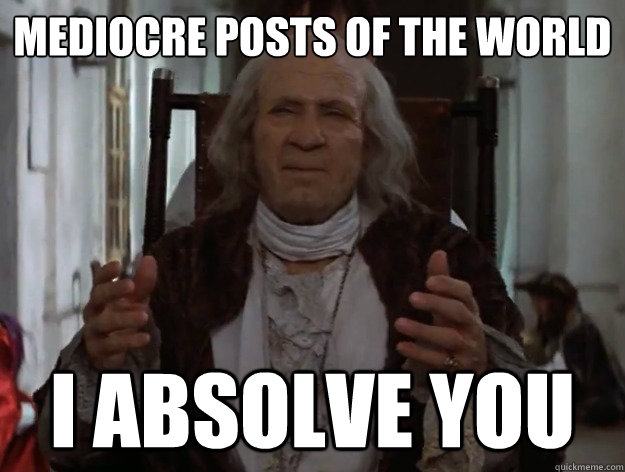
It's the difference between art and history. Without artistic license to impove on the Salieris concertos we would be left with ........ mediocrity. Everywhere.

3oozew.jpg

LOL. Amadeus isnt even meant to be accurate. Great pic!
 
.-.
The Express (2008).

The scene at Mountaineer Field never happened, and is a brutal representation of the West Virginia fans. Whatever you think about WVU and their fan base, that scene is simply a not fair representation of that university.
Remember the Titans.

T.C. Williams was fairly dominant in real life that year (i.e. they didn't win squeakers) and a number of characters were amalgamations (Ray the TE that Gary threw off the team, the bigotted assistant coach, Ryan Goseling character and his father). Plus Cheryl was one of four Yost daughters and I believe I read that they were not the only school forced to integrate in their conference.

Just saw it last night again...
 
Husky25 - Sorry ... I should have been more specific. I thought if the thread devolved enough to include Natural Born Killers, I could comment on a movie that didn't clearly advertise itself to be fiction ... while incredulously misrepresenting history, with no repect for the actual historical facts, in an effort to make money ... :)

I called NBK out as well but the poster was making a point about Oliver Stone. There is a subtle difference between actual documented history being the basis for a film and a film that is merely inspired by historic events. That's my point. I probably went a little over the top in make it though...:)
 
I'm pretty sure we didn't kill Hitler and Goebbels by blowing up a theater in Paris. Unless someones been lying to me...

Better yet....what was Tarentino really saying with Inglourious Basterds?

Shoshana and the use of cinema on a Jewish revenge trip against German leadership and all that cackling during the ritual immolation/holocaust scene in the cinema?
 
There is a subtle difference between actual documented history being the basis for a film and a film that is merely inspired by historic events. That's my point. I probably went a little over the top in make it though...:)

None are oactual events no matter how hard they try. Directors always take an editorial stance. It's why I liked Clint Eastwoods "Letters from Iwo Jima" and "Flag of our Fathers" telling the Iwo Jima story based on an Amerian Narrative and a one a Japanese narrative. It's still not history but it offers different perspectives. Ultmately there' a thematic point and editing that outweighs any film as a historical document.
 
.-.
Donnie Brasco - pretty accurate historically, with one significant, and odd, exception. He was actually closer friends with Sonny Black (Michael Madsen), who was ultimately killed for letting Donnie infiltrate the Bonnano family. Lefty Ruggiero simply went to prison in a large part on evidence derived from the Donnie Brasco operation. Strange that the Directors would switch that. I get that it was dramatic to have Al Pacino march off to his executioner, but in some ways a reaction to a betrayal (in his mind) that Joe Pistone had inflicted on him would have been just as interesting.
 
Marie Antoinette

Pretty accurate historically with the obvious exception of the music. Like a lot of Sofia Coppola's stuff, it was visually awesome with some issues around pacing and character insight. Overall a good movie. Dunst and Schwartzman were perfect for those two characters.
 
"Lincoln" never once showed Abe hunting vampires.

Yes that bothered me too.
It's just a result of the history book publishers who don't want to admit tht they've misled schoolchildren for decades.
 
Elizabeth: The Golden Age

When you duckk up the initial movie as badly as the Director did from a historical standpoint, how the hell did he think he could make a sequel? The biggest problem is that the first movie inaccurately gets rid of 2 of her 3 most important real life advisers. Dudley, Burghley and Walsingham were Elizabeth's top 3 advisers for almost her entire life, but the first movie fictionalizes Dudley's internal banishment, and Burghley's forced retirement. Which is a problem for the sequel, and forces the Director to elevate Raleigh into a much bigger role than he had in real life. Dudley essentially led the preparations for the Spanish invasion.

I would say that the sequel is actually more accurate than the first movie, which is a very low hurdle, and the sequel's historical accuracy problems are about 90% the result of the first movie being so absurdly fictionalized that it was almost impossible to get back on track with the true story, which really is a fascinating story. The defeat of the Spanish Armada is one of the 2 most important battles (in my opinion) in the history of the world. The entire history of North America and the United States depended on the English keeping Spain from landing that Armada on English soil.
 
Enemy at the Gates - The Battle of Stalingrad is the other one of the 2 most important battles in the history of the world, in my opinion. The book is amazing, and the movie is a pretty faithful representation of the book, with the chief exception of elevating Kruschev to be much more important in the movie than he was in the book. A little dramatic license, and not a big deal in my opinion.

The opening scene of Enemy at the Gates makes the storming of Normandy in Saving Private Ryan look fairly benign by comparison.
 
.-.
Stalingrad and Defeat of the Spanish Armada are the two most important battles in history in my opinion.
 
Casino

Pretty accurate. The one scene I had always assumed was BS was Rothstein's TV show. Turns out the real Rothstein actually had a TV show where he complained about the Nevada gaming commission. Those 3 really were total idiots. The quote by Pesci's character, "in the end, we ****ed it all up" sums up both the movie and the 3 real life characters.
 
Kingdom of Heaven - One of my favorite swords and sandals movies from 10 years ago, but it has some issues. The Angus McFadyn character Guy (the guy who played Robert the Bruce in Braveheart) and Eva Green's characters actually loved each other very much and remained committed to each other their entire lives. Balian (Bloom) and Guy were actually allied with rival factions and kept an on again, off again pissing match going until Balian died. Balian was not a blacksmith. His father was actually a powerful noble from the holy lands, and Balian inherited his lands and title. Reynald (Brendan Gleeson) was really nuts, but he was more the leader to Guy than Guy's sidekick.

It was strange that they would make a movie out of an episode of history that was so messy, and of which the historical record is so spotty. The movie tries to express multiple metaphors about religious fanaticism and the complexity of right and wrong, and uses the fall of Jeruselum in the 12th century as the setting for a really interesting story.

I give this movie a pass on the historical problems because it was so ambitious and well done as a film, and the creative choices make a lot more sense than they did with a movie like Elizabeth or The Last Samurai where the reality was so fascinating it should have just been left alone.
 
JFK is based largely on Jim Garrison's NON fiction book "On the trail of the assassins" If you believe Jim Garrison then the movie is mostly accurate and outstanding.

BTW "On the trail of the assassins" is a fabulous book. A real life Dan Brown novel. Good luck finding it in bookstores.
 
.-.
Going to resuscitate this thread. King Arthur (2004 Clive Owens version) is making the rounds on cable. One way to avoid getting into trouble with the historical record is to pick periods of history where there is almost no historical record to get in trouble with, which is what this movie does. I like this movie a lot and it was a box office success.

English history effectively stops from the end of Roman occupation until the late 9th century. Literacy dropped to essentially a few hundred monks at monastaries, and the language was changing so much over this period that it makes tracking a historical record even more difficult. Making Arthur Roman is as reasonable as any other theory about the historical basis for King Arthur. Society was devolving into fiefdoms that were often no more than a few miles across, and feudalism would develop based on these Germanic warlords or Roman nobles offering protection to the local peasantry in return for food and their fealty.

The Saxons were not mindless barbarians, but more like refugees fleeing some fairly awful tribes coming in behind them out of eastern Europe. The climactic Battle of Badon was actually fought, but historical records are not even clear on who the two sides were or why they fought. It is likely that it was a battle between Celtic Britons (Owens side) and Saxons (Stellan Skarsgard's side), but why the battle occurred is not clear. It also may have not been much more than a skirmish between 500 to 1,000 men on each side.
 
Last edited:
Going to resuscitate this thread. King Arthur (2004 Clive Owens version) is making the rounds on cable. One way to avoid getting into trouble with the historical record is to pick periods of history where there is almost no historical record to get in trouble with, which is what this movie does. I like this movie a lot and it was a box office success.

English history effectively stops from the end of Roman occupation until the late 9th century. Literacy dropped to essentially a few hundred monks at monastaries, and the language was changing so much over this period that it makes tracking a historical record even more difficult. Making Arthur Roman is as reasonable as any other theory about the historical basis for King Arthur. Society was devolving into fiefdoms that were often no more than a few miles across, and feudalism would develop based on these Germanic warlords or Roman nobles offering protection to the local peasantry in return for food and their fealty.

The Saxons were not mindless barbarians, but more like refugees fleeing some fairly awful tribes coming in behind them out of eastern Europe. The climactic Battle of Badon was actually fought, but historical records are not even clear on who the two sides were or why they fought. It is likely that it was a battle between Celtic Britons (Owens side) and Saxons (Stellan Skarsgard's side), but why the battle occurred is not clear. It also may have not been much more than a skirmish between 500 to 1,000 men on each side.


The King Arthur from Transformers might have been as accurate.
 
Watching Patton this morning. This movie is very accurate historically as far as movies go. A few of his writings or speeches were shifted to dialogue or given in different places than in real life, but all of that was fair artistic license. The one quibble I have is that the movie is a little rough on Montgomery, who was a good general in real life and almost as crazy and reckless as Patton.

One thing that sticks out is that the jeeps drive like lunatics throughout the movie. I assume this was simple forshadowing of how Patton would eventually die, but maybe they did drive like that.
 
By many accounts I've read, the real Patton had kind of a Elmer Fudd-like voice. That's not George C. Scott. Thus, not-factual.

The real Patton starts speaking about 1:18 into this vid:
 
Sorkin Movies:

The Social Network - Pretty accurate. As is normal with Sorkin, there was some artistic license (Winklevosses and Saverin were never in the same deposition, for example), but a lot of the details, like Zuckerberg writing Facesmash while drunk and blogging was accurate. I suspect people's opinion on Sean Parker is entirely based on perspective, so I don't know that there is a factual answer on that. Also, Zuckerberg got thumped in both lawsuits, and the movie shows that he probably deserved it.

Steve Jobs - I read the book. The movie uses this completely artificial construct of 3 product debuts to have a ton of dialogue and action, so the details are way off. For example, by the third act, Wozniak had been gone from Apple for a decade, yet Jobs tells Wozniak that he can keep his job. Jobs' friends claimed the movie was inaccurate and overly negative. That said, in an interview, Wozniak said that the movie is an accurate portrayal of his relationship with Jobs, as did most of the anti-Jobs people. Given that Lisa Brennan Jobs recently came out with a book that was absolutely brutal on her father, it appears that Sorkin may have even pulled some punches when it came to that relationships.

Charlie Wilson's War - Pretty accurate. The complaints about the movie were primary that other people did not get more credit for Afghanistan. The movie was about Charlie Wilson. People need to chill.

Moneyball - this movie gets some weird facts wrong. For example, a lot of the drama revolves around Scott Hatteberg and whether Howe would play him or not. Hatteberg had a solid season and played a lot. I don't think there was really that much drama about playing him. Some of the best players, like Miguel Tejada and Eric Chavez, don't even make an appearance.
 
Last edited:
.-.

Forum statistics

Threads
168,632
Messages
4,587,018
Members
10,497
Latest member
Orlando Fos


Top Bottom