OT 1955 Connecticut Flood | Page 3 | The Boneyard

OT 1955 Connecticut Flood

Status
Not open for further replies.
I was always surprised by that Riverside apartments. Big urban projects are quite possibly the worst social experiment of the last 50 plus years and for a relatively small town those Riverside apartments had the feel of big city projects with big city problems.

They are actually related. The Riverside Apartments was built on land wiped clean by the 1955 flood using Federal recovery funds during a time that public housing was viewed as a good thing.

http://www.ansoniahousing.com/
 
They are actually related. The Riverside Apartments was built on land wiped clean by the 1955 flood using Federal recovery funds during a time that public housing was viewed as a good thing.

http://www.ansoniahousing.com/
Thanks for the link. I live out of CT. now but my heart is always in CT., the valley is an interesting place.
 
Love the Valley.

I remember as a young guy going to the Thanksgiving Day game with the 2 Pagliaro's and a Central American kicker playing for Derby against Shelton. I had never seen a HS game so buzzed. Derby, at that time, was full of Italians/Irish/Polish. And my grandma gave me sugar cereal that Mom never would.
 
I've done a little reading on industry of the Valley - it's amazing to think of the sheer concentration of heavy industry CT had. From Bridgeport (something like the most industrial use per square mile of any city in America at one point of time due to the aircraft industry) up through the valley to Waterbury which was the arsenal for ammunition (brass) during WWII.
 
I was born and raised in Ansonia from the late 60s through the mid 80s. My wife, the same. I lived in a poor part of town. My wife, the good part. My father worked in a factory until he broke his back in an accident on the job. My mother then worked at a hospital in Bridgeport. My wife's father had a better factory job. They lived well, we struggled. I got into my first fist fight in first grade. I got surrounded by the other kid's cousins, aunts and uncles. We were all in the same grade. I freaked out and laid the kid out. I went home and asked my father what to do next time. He said to find a wall and put your back up against it so you only need to fight the people in front of you. I WAS FREAKIN SIX YEARS OLD!!!

My sisters were older and experienced major race riots in the 70s in the high school. I saw drugs being passed around in 5th grade and it wasn't just pot. In 8th grade, a girl in my class was dating a high school kid who was incarcerated. My wife went to the nicer schools on the hill and then a catholic high school. She never experienced what I did and we lived in the same town, a couple of miles apart.

Life in that blue collar town varied a lot. But even lower middle class people could afford a house. The thing is, it isn't the kind of house people want to live in today. No one builds true starter homes anymore. Just drive through the old neighborhoods in towns like that and you will see tiny little homes. Hell, a raised ranch was living large. People are spoiled and have a massive entitlement mentality today. It is a giant rat race.

Someone mentioned Eddy's bakery. I worked there for more than 2 years in high school. My father grew up with the then owner in Italy. It turned out to be a satisfying and rewarding job. I really liked it.
 
I had a completely different experience growing up in Ansonia in the 1950s. My brother and I would go to football games, walking from my grandmother's house, it was several miles. We were 5 and 7, and it was no big deal. We had more freedom in Ansonia than kids almost ever get today.

In the 50s, Ansonia was peaceful, but perhaps that was because we lived up on the hill. We moved there when it was still rural, we could walk in the woods for miles (or at least what seemed like miles to little kids) without seeing houses or streets. But I went to school down the hill, Lincoln or Larkin, and later Pendergast for 7th grade when it first opened. Then we moved to Fairfield for (much(2)) better schools, but I liked the people in Ansonia better. Blue collar roots.
 
.-.
Oh yeah, the 50s were WAY different in the valley. The stories my mother told me made it sound like a different planet. My parents won dance contests on the beach and my father was known to sing in the back seat of a friend's convertible as they drove down the post road.

The housing projects helped no one. Not the people who lived in them nor the other residents who experienced first hand what, "the road to hell is paved with good intentions" means.
 
I work in Putnam where they got absolutely demolished when dams broke on the Quinnebaug. Town never recovered
I live and work in putnam...I think the town is beautiful now. It changed with the times and the best is yet to come.
 
The flood is my absolutely earliest life memory. I was only 3. I remember my father's emotion announcing Unionville was gone, and I remember being on the hill on Plainville Ave above the town and seeing houses floating below and a helicopter landing in an open area repeatedly right near us. I didn't have any complete memories, context, or understanding except the sense of anguish of people clearly made those moments part of my permanent memory. Sort of like clearly remembering where you were when JFK was shot. Somehow it sticks.
 
From what I've seen in the Boston area, the housing projects almost always helped the bankers and the developers, almost always destroyed the neighborhoods (example Roxbury before the projects), and rarely helped the poor people who were meant to live within the projects. Ansonia was probably no different.
 
From what I've seen in the Boston area, the housing projects almost always helped the bankers and the developers, almost always destroyed the neighborhoods (example Roxbury before the projects), and rarely helped the poor people who were meant to live within the projects. Ansonia was probably no different.

Concentrated public housing projects and the interstate highway system together killed the inner cities. If one looks at the interstate highway maps from the '50's, when a highway was built into a city it almost always went through the poorest neighborhoods because land value were lower and the residents did not have enough political clout to stop it. Thus, the poorer neighborhoods were either torn down and replaced by massive housing projects (see Chicago, the Bronx, etc.) and/or physically separated from the rest of the city (see I-84 in Hartford).
 
I was 12 when the storm hit and lived on Ells Street not far from Nolan School. You could see the flood waters from my backyard. I walked down to the flood on Main Street and was shocked at the destruction. A few days later we were required to get shots because we were in the area.

The flood may have cost Ansonia a few great basketball years. Dave Hicks family left Ansonia after the flood and moved to New Haven where he became a star for Wilbur Cross.
 
.-.
I was 12 when the storm hit and lived on Ells Street not far from Nolan School. You could see the flood waters from my backyard. I walked down to the flood on Main Street and was shocked at the destruction. A few days later we were required to get shots because we were in the area.

The flood may have cost Ansonia a few great basketball years. Dave Hicks family left Ansonia after the flood and moved to New Haven where he became a star for Wilbur Cross.
Nolan school. The site of my first fist fight. Good times......not.
 
I work in Putnam where they got absolutely demolished when dams broke on the Quinnebaug. Town never recovered
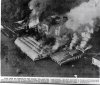
And this storm made the future of, then mayor John Dempsey. Also Gov. Ribicoff became a household name as well. The photo is an aerial shot of the Putnam Finishing plant that exploded when flood waters came in contact with barrels of magnesium
 

Attachments

  • Willimantic FD Pictures-stories (230).jpg
    Willimantic FD Pictures-stories (230).jpg
    77.6 KB · Views: 26
I wasn't alive quite yet in 1938, but I am a history buff.
My parents told about it every time there was an approaching hurricane.
The amazing thing is it hit with so little warning and was a category 3 when it made landfall. I'm kinda of glad I missed it. Even though it was late Sept there were still plenty of people enjoying the late summer in small cottages on the shoreline .The tidal surges were 17 ft. The loss of lives was substantial.
I 've been through a bunch of hurricanes and Gloria which left us without power for a week was a category one. That was enough for me.
I too was not alive for 38, but there were stories galore about that storm. One book that tells several about the Great Storm of 1938 is the book "Sudden Sea". One story, in the book, tells about how Katherine Hepburn and their family endured the total destruction of their home in Old Saybrook. Also just before the storm, and on that morning, Kate was playing a round of golf, and sank a hole in one. There are other stories, as well.

http://www.curledup.com/suddenc.htm
 
Concentrated public housing projects and the interstate highway system together killed the inner cities. If one looks at the interstate highway maps from the '50's, when a highway was built into a city it almost always went through the poorest neighborhoods because land value were lower and the residents did not have enough political clout to stop it. Thus, the poorer neighborhoods were either torn down and replaced by massive housing projects (see Chicago, the Bronx, etc.) and/or physically separated from the rest of the city (see I-84 in Hartford).

This is so true. A fine (but poor)neighborhood was wiped out in New Haven for I95 and the Oak Street Connector.. Ironically the Connector never connected anything. Projects followed.
 
Status
Not open for further replies.

Forum statistics

Threads
168,217
Messages
4,557,696
Members
10,442
Latest member
StatsMan


Top Bottom