- Joined
- Jan 6, 2015
- Messages
- 8,289
- Reaction Score
- 70,770
Since the Butler game, St. John’s has ripped off an eight-game winning streak that has firmly established the Red Storm as the second-best team in the Big East. During this stretch, they’ve leaned on physical defense, dominant rebounding, and timely scoring runs—especially in the second half—to pull away from opponents. The consistency and edge they’ve shown since Butler make it clear they’ve found their identity and are peaking at the right time.
Offensively, St. John’s has been effective by playing through the paint, attacking the glass, and generating second-chance points rather than relying heavily on perimeter shooting. They’ve moved the ball with purpose, using dribble penetration to collapse defenses and create easier looks late in possessions. While not always flashy, the offense has been efficient, physical, and timely, particularly during decisive second-half runs.
Defensively, St. John’s has set the tone with physical on-ball pressure and an emphasis on taking opponents out of rhythm early in possessions. They’ve been strong on the glass, limiting second chances and turning missed shots into transition opportunities. As the winning streak has grown, their defense has become more connected and reliable, especially when locking down late to protect leads.


Once again, Zuby Ejiofor has been a physical, high-energy presence, anchoring St. John’s frontcourt with his strength, rebounding, facilitating, and interior defense. Offensively, he’s done his best work around the rim, scoring off rolls, offensive boards, and put-backs rather than needing plays run for him. His consistency, toughness, and willingness to do the dirty work have made him a key piece of the team’s identity during this winning stretch. Additionally, with St. John’s starting lineup lacking a true point guard, Ejiofor has stepped up as the team’s assist leader. He’s also been a fantastic defender.
Backing up Ejiofor, Ruben Prey has shown noticeable growth this season, becoming a more consistent and confident scorer and rebounder. He’s improved his defensive awareness and positioning, helping St. John’s guard multiple frontcourt threats effectively, so there isn’t a significant defensive drop-off when Prey is on the floor.
Compared to his time at Providence, Bryce Hopkins has played a more streamlined, team-oriented game this season while still providing a reliable scoring punch. He’s been asked to do less isolation creation and more attacking within the flow of the offense, which has improved his efficiency and shot selection. While his role at Providence showcased him as a primary option, this year he’s looked more disciplined and impactful within a structured system.
At St. John’s, Oziyah Sellers has settled into a more defined and confident role as a perimeter scorer, thriving off movement, spot-up shooting, and opportunistic drives. Compared to his time at USC, where his role and minutes fluctuated, he looks more comfortable and decisive, especially when shooting in rhythm. The structure and pace at St. John’s have allowed him to maximize his strengths as a complementary scorer rather than forcing creation. He ranks as the weakest defender in the starting lineup.
Ian Jackson has brought instant offense and pace, using his athleticism and confidence to pressure defenses as a scorer and shot-creator. His impact has been streaky, with stretches where he can take over games offensively followed by quieter nights when shots aren’t falling and efficiency dips. Even so, his aggression, speed, and willingness to attack consistently change the tempo and give the offense a different gear.
Because of Jackson’s inconsistency, Dylan Darling has effectively shared point-guard duties, as he’s the team’s only true point guard. An excellent defender, Darling has been a steady and efficient presence, contributing primarily as a reliable floor spacer and secondary playmaker. He moves the ball well, finds open shooters, and makes smart decisions in the half court, helping keep the offense balanced. While not a primary scorer, his consistency, basketball IQ, and complementary skill set make him a quietly important rotation piece.
Dillon Mitchell fits St. John’s roster and mentality perfectly. He’s been a versatile contributor, offering size, energy, and scoring both inside and facilitating on the perimeter. St. John’s most versatile defender, Mitchell and Ejiofor form one of the most stout defensive frontcourt duos in the nation. Interestingly, the duo also leads the team in assists. While Mitchell isn’t always a focal point offensively, his consistency, effort, and ability to impact the game in multiple ways make him a valuable complementary piece. When Mitchell is on the bench, Hopkins slides to the four, or high-energy wing Sadiku Ibine Ayo picks up minutes.
After playing a primary scoring role at Arizona State, Joson Sanon has struggled at times at St. John’s, mainly due to adjusting to Rick Pitino’s team-oriented system. His production has been inconsistent, with streaky shooting making it difficult for him to earn featured touches. Combined with below-average defense, he’s settled into a microwave scoring role off the bench, reaching double figures just once during the winning streak.
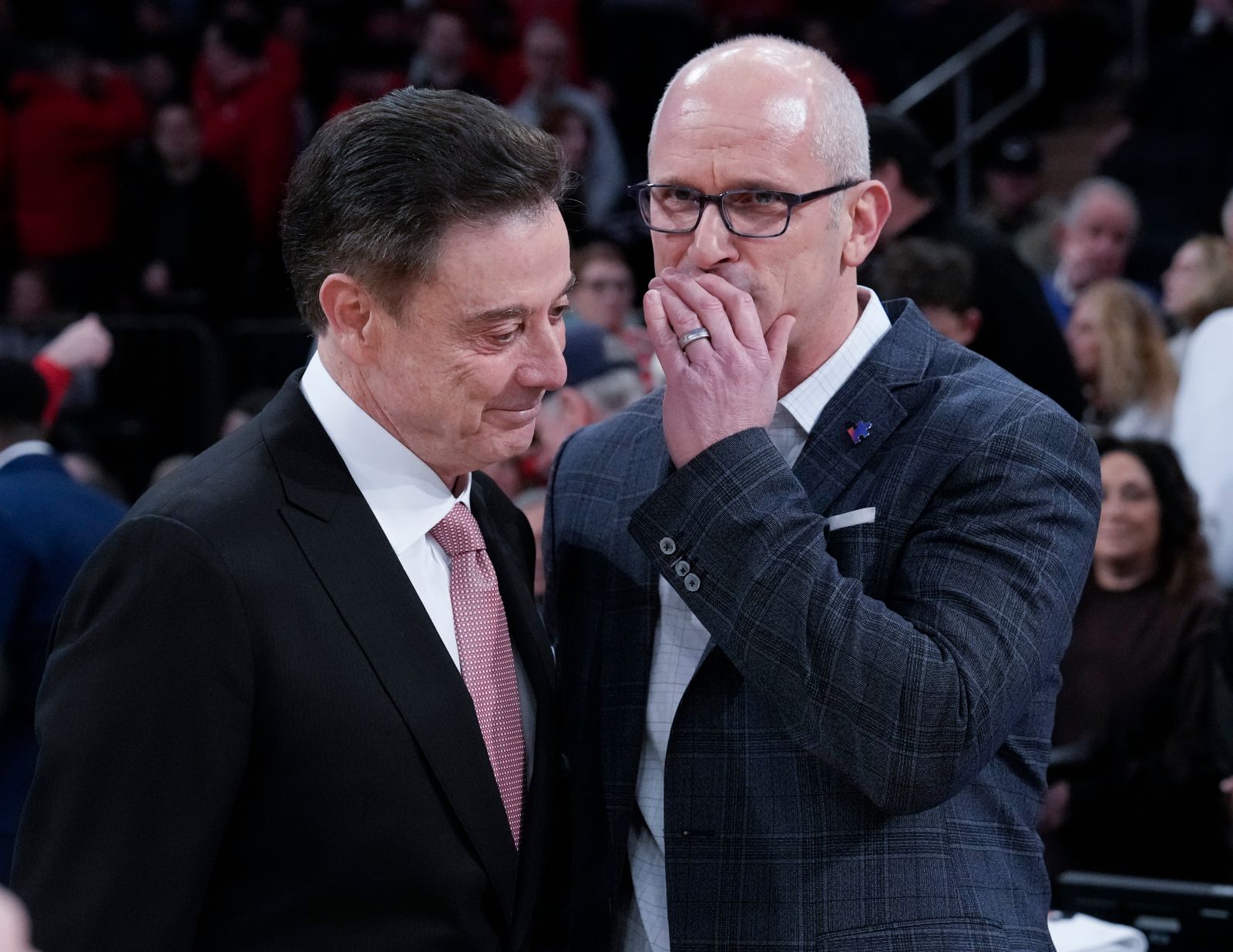
With UConn looking like a championship-caliber team over the last two games, Friday’s matchup between the top teams in the Big East has the makeup of a true heavyweight bout. A key for UConn will be controlling tempo, limiting turnovers, and not allowing Pitino’s pressure to speed them up. Offensively, attacking the paint and forcing St. John’s bigs into foul trouble can open clean kick-out threes. Defensively, taking away transition opportunities and forcing St. John’s to score in the half court favors UConn’s discipline and execution.
Should be an awesome one!
Offensively, St. John’s has been effective by playing through the paint, attacking the glass, and generating second-chance points rather than relying heavily on perimeter shooting. They’ve moved the ball with purpose, using dribble penetration to collapse defenses and create easier looks late in possessions. While not always flashy, the offense has been efficient, physical, and timely, particularly during decisive second-half runs.
Defensively, St. John’s has set the tone with physical on-ball pressure and an emphasis on taking opponents out of rhythm early in possessions. They’ve been strong on the glass, limiting second chances and turning missed shots into transition opportunities. As the winning streak has grown, their defense has become more connected and reliable, especially when locking down late to protect leads.
Once again, Zuby Ejiofor has been a physical, high-energy presence, anchoring St. John’s frontcourt with his strength, rebounding, facilitating, and interior defense. Offensively, he’s done his best work around the rim, scoring off rolls, offensive boards, and put-backs rather than needing plays run for him. His consistency, toughness, and willingness to do the dirty work have made him a key piece of the team’s identity during this winning stretch. Additionally, with St. John’s starting lineup lacking a true point guard, Ejiofor has stepped up as the team’s assist leader. He’s also been a fantastic defender.
Backing up Ejiofor, Ruben Prey has shown noticeable growth this season, becoming a more consistent and confident scorer and rebounder. He’s improved his defensive awareness and positioning, helping St. John’s guard multiple frontcourt threats effectively, so there isn’t a significant defensive drop-off when Prey is on the floor.
Compared to his time at Providence, Bryce Hopkins has played a more streamlined, team-oriented game this season while still providing a reliable scoring punch. He’s been asked to do less isolation creation and more attacking within the flow of the offense, which has improved his efficiency and shot selection. While his role at Providence showcased him as a primary option, this year he’s looked more disciplined and impactful within a structured system.
At St. John’s, Oziyah Sellers has settled into a more defined and confident role as a perimeter scorer, thriving off movement, spot-up shooting, and opportunistic drives. Compared to his time at USC, where his role and minutes fluctuated, he looks more comfortable and decisive, especially when shooting in rhythm. The structure and pace at St. John’s have allowed him to maximize his strengths as a complementary scorer rather than forcing creation. He ranks as the weakest defender in the starting lineup.
Ian Jackson has brought instant offense and pace, using his athleticism and confidence to pressure defenses as a scorer and shot-creator. His impact has been streaky, with stretches where he can take over games offensively followed by quieter nights when shots aren’t falling and efficiency dips. Even so, his aggression, speed, and willingness to attack consistently change the tempo and give the offense a different gear.
Because of Jackson’s inconsistency, Dylan Darling has effectively shared point-guard duties, as he’s the team’s only true point guard. An excellent defender, Darling has been a steady and efficient presence, contributing primarily as a reliable floor spacer and secondary playmaker. He moves the ball well, finds open shooters, and makes smart decisions in the half court, helping keep the offense balanced. While not a primary scorer, his consistency, basketball IQ, and complementary skill set make him a quietly important rotation piece.
Dillon Mitchell fits St. John’s roster and mentality perfectly. He’s been a versatile contributor, offering size, energy, and scoring both inside and facilitating on the perimeter. St. John’s most versatile defender, Mitchell and Ejiofor form one of the most stout defensive frontcourt duos in the nation. Interestingly, the duo also leads the team in assists. While Mitchell isn’t always a focal point offensively, his consistency, effort, and ability to impact the game in multiple ways make him a valuable complementary piece. When Mitchell is on the bench, Hopkins slides to the four, or high-energy wing Sadiku Ibine Ayo picks up minutes.
After playing a primary scoring role at Arizona State, Joson Sanon has struggled at times at St. John’s, mainly due to adjusting to Rick Pitino’s team-oriented system. His production has been inconsistent, with streaky shooting making it difficult for him to earn featured touches. Combined with below-average defense, he’s settled into a microwave scoring role off the bench, reaching double figures just once during the winning streak.
With UConn looking like a championship-caliber team over the last two games, Friday’s matchup between the top teams in the Big East has the makeup of a true heavyweight bout. A key for UConn will be controlling tempo, limiting turnovers, and not allowing Pitino’s pressure to speed them up. Offensively, attacking the paint and forcing St. John’s bigs into foul trouble can open clean kick-out threes. Defensively, taking away transition opportunities and forcing St. John’s to score in the half court favors UConn’s discipline and execution.
Should be an awesome one!
Last edited: